คำค้นยอดฮิต: ข้าวเหนียวมะม่วง ของขวัญออแกนิค ผลไม้สด
TH | EN
฿ 0.00
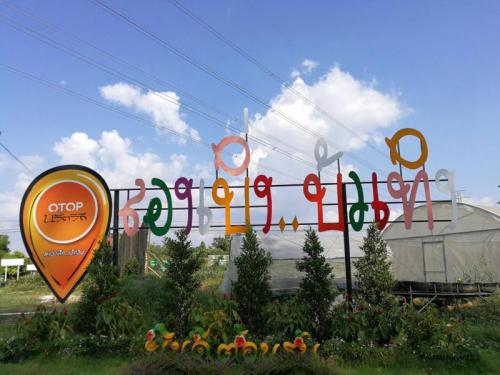
Smile Lemon Learning Center for Integrated Agriculture
Sub district Bang Talat District Khlong Khuean Province Chachoengsao
Image
Image
Image
Image
Weather
Closed
Business hours
• Sunday
: 09:00 - 16:00
• Monday
: 09:00 - 16:00
• Tuesday
: 09:00 - 16:00
• Wednesday
: 09:00 - 16:00
• Thursday
: 09:00 - 16:00
• Friday
: 09:00 - 16:00
• Saturday
: 09:00 - 16:00
Note
: -
Review Score
0
Availability
0
Value
0
Service
0
Read more >
Information
Integrated Agriculture Learning Center
Source
Thailand Tourism Directory
Recommended
Entrance fees
• Entrance fees: Non-fee
• Remark : -
Review (0)
0
จาก 5.0
Availability
Value
Service
Relate Agritourism
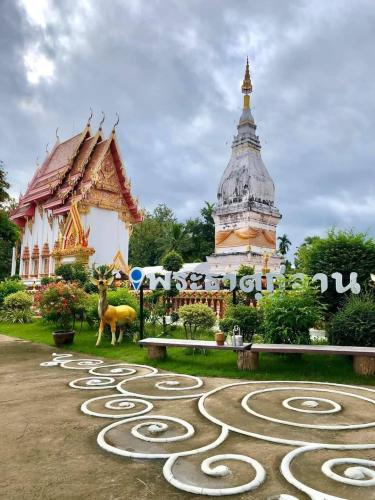
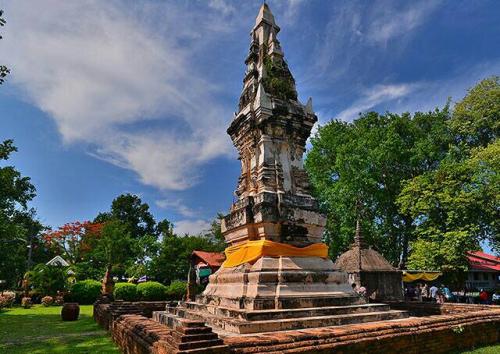
Phra That Kuchan Located within the Ban Ku Chan Temple is an important sanctuary. People of Yasothon and nearby provinces pay their respects. The appearance is a square lotus-shaped chedi, shaped like Phra That Phanom, but smaller. The part of the lower base in the shape of an inverted lotus is a low facing lotus. Supporting a flat rectangular high base connected with a square lotus shape decorated with exquisite and beautiful patterns in ancient times. and the top of the relic in a square shape, which supports the tiered top From the evidence, it should be built according to the general motto of building relics, namely, to contain the Buddha's relics. Each year, a water bathing ceremony is held to preserve the good traditions. Architectural features: Phra That Ku Chan, width 5.10 meters, height 15 meters. Location is located at Ban Ngew. In the middle of the courtyard of Wat Ku Chan, Ku Chan Subdistrict, Kham Khuean Kaeo District, Yasothon Province which looks similar to Phra That Phanom. The only difference is the size that Phra That Ku Jan is smaller. Significance to the community: It is a place of worship for the people of Yasothon and nearby provinces. Every year, the people of Ku Chan sub-district will bring water, perfumes to bathe the relics in the morning of the full moon of the 6th month. In the afternoon, they go to bathe the water ceremony. Ku" after that, they will take them to Nong Sa Phang to bring water from Nong Sa Phang to perform the ceremony Pouring water on relics and bai sema which this ritual must be done annually There is a belief that if the ceremony is not performed, it will cause rain out of season; the villagers of Gu Zhan therefore practice this ritual regularly.
Yasothon
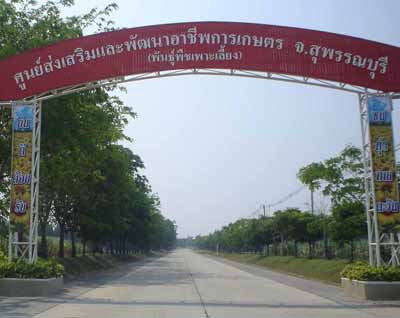
It is organized as a learning point station in a systematic way such as 1.1. Orchid seed service station and an orchid seed room 1.2. Planting station for various orchid species and increasing the value of orchids 1.3. Ornamental plant planting and propagation station 1.4. Biological production (Trichoderma Beauveria BT), composting does not return to the pile of Mae Jo formula. 1.5. Earthworm, cricket and sloping station 1.6. Hydroponics and Sky Vegetable Planting Station 1.7. Various types of mushroom cultivation stations 1.8. Plant seedling cultivation station and food processing from mushrooms 1.9. Different types of fruit plant propagation stations 1.10. Integrated Agricultural Station according to the Sufficiency Economy Philosophy (can be adjusted as appropriate)
Samut Sakhon
Suphanburi Banana Conservation Center: It is a sufficiency agricultural community enterprise, responsible for the conservation of rare banana species in Thailand; and it has collected up to 108 banana species, especially the species of Suphan Buri itself.
Suphan Buri
The garden is adjacent to the irrigation canal which cause a cool wind blowing all the time. Inside the garden is shady. There are kiosks for tourists to sit, relax and eat the fruits from the garden. The highlight of Pu Yai Somkuan Garden is the gigantic 100 years old mangosteen tree with tall trunk and beautiful bush. The distinctive feature of the 100 years old mangosteen is that it has a thinner shell, more delicious than normal mangosteen; but smaller in size.
Rayong
Ban Santitham is located on the area of 16,000 square meters with more than 700 kind of healing herbs spread over the area. There is also a Thai wooden house which is used to exhibit a variety of ancient agricultural tools, and there is a barn, rice threshing and rice milling equipment display behind the house. In addition, a part of the house is reserved for youth camp with the space for recreation activities.
Chachoengsao
It is an agricultural tourist attraction. Learning resource for reducing high production costs from the use of chemical fertilizers. Deteriorate health cause disease to human life, therefore change the concept of improving the quality of production and reduce production costs through integrated pest prevention.
Chai Nat
Suan Hom Meesuk, an agarwood agricultural group community enterprise, is the source of one of the best agarwood species in Thailand
Rayong
Phu Mak Prik is a community forest, in Kut Chum Subdistrict, Kut Chum District, Yasothon Province, in the past, it was an area on Phu Suan Nueng which used to be a source of chili gardening until it has deteriorated. Subsequently, the forest was restored and replanted to become greener again after serious care from the Phu Mak Prik Sect. which developed into a temple of Phu Mak Prik later. And currently, the temple is in the process of building a new half-timbered and half-cemented ubosot amidst the shady nature of trees. It is expected that when finished it will be very beautiful. On Wat Phu Mak Phrik, there is peace and tranquility. It is a shady place to practice meditation. There is also a small viewpoint which those who go up to visit the temple can visit as well. The entrance to the viewpoint might be a bit difficult to see, but you can ask for directions from the monks in the temple
Yasothon
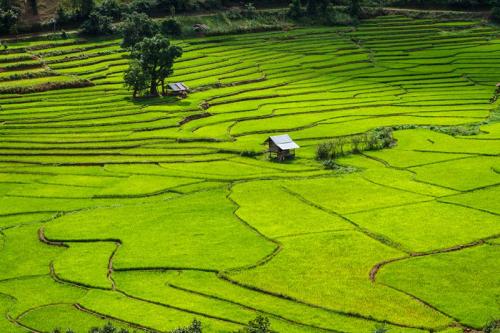
It is an agritourism attraction that is still natural and pure. It is also warm with the beautiful way of life of the hill tribes. During September to October is the rice farming season which is suitable period to visit.
Mae Hong Son
The Royal Agricultural Station Angkhang is an ecotourism site where the nice garden and the interior design are very beautiful and attractive. This is the famous place for tourists to visit and see the cold weather plants and flowers growing. Numbers of tourists visit Doi Angkhang and the Royal Agricultural Station Angkhang, especially in winter.
Chiang Mai
Panan garden has many types of fruit planted there, including rambutan, mangosteen, longkong, durian. The cost of visiting Panan garden during May - June, when the orchard is full of fruit is 200 baht per person (price subject to change). In addition, there is also accommodation in the orchard.
Rayong
Winter Flowers Learning Plot - Cymbidium orchid cut flowers - convert tulips Myrrh Learning Plot - Rosemary - Geranium How to grow crops in conservation on the highlands learning plot - Avocado - Arabica coffee - Macadamia Methods for organizing activities - There is a photo spot, parking lot, restroom available. - Take a walk around the learning plots (flower plants, fragrant plants, conservation plants) and learn about propagation and planting/care - There is a point for selling community products, products, vegetables, fruit trees, field crops. - Drinks, coffee, tea, Jiaogulan are available. - There is a house / tent camping service. Participation of tourists - See, taste, shop, community products, bag products, souvenirs, agricultural products, winter fruit trees, field crops, seasonal vegetables - Take a photo, check-in, flower/tulip plots - Take a walk around the learning plot inside the center - Indulge in the atmosphere of the sea of mist in the winter of Chiang Rai. Tour program: 2 days 1 night program Day One 09.30 Depart from Mae Fah Luang International Airport, Chiang Rai, travel to Cherntawan Farm. 10.00 Stop for breakfast at “Phu Thian Resort” / “Jui Kung Pao” 11.00 Cherntawan Rai, study Dharma and the concept of the University of Buddhist Economics (Alternative educational institutions for development according to Buddhist economic philosophy) integrated natural agriculture 12.00 Depart from Cherntawan Farm Stop for a meal at "Lanna Tawanwa" restaurant. 13.00 Watch a demonstration of roasting Assam tea and making Miang, the original model by the farmer community, Mae Loi tea production community. 14.00 Depart from Mae Loi Tea Production Community Enterprise Group To Rai Ruen Ruen, Ngew Subdistrict, Thoeng District 14.30 See the beauty of the organic farm by the new generation, Snack from organic farming plots directly for health, learning and new experiences both principles and actions 15.00 Depart from Rai Ruen Ruen to Doi Pha Mon Center 17.00 Tribal dinner, grilling, activities around the bonfire. along with watching performances from ethnic youth farmers Tribal arts and culture from the community amidst nature and sunset Day Two 04.30 Wake up, do personal tasks 05.00 Travel to the top of Phu Chi Fa Admire the beautiful natural scenery mountains and sea of clouds 06.00 Return to Doi Pha Mon Center 07.00 Have breakfast 08.00 Enjoy the agricultural activities of the center, Doi Pha Mon, see the fragrant plants, tulips, see the beauty of the Cymbidium plots and learn how to grow coffee, avocado and macadamias, taste fresh coffee. High quality from farmers 12.00 Take a break for lunch 13.00 Travel to Ban Phithak Thai Organic Coffee Producers Group. 13.30 Take a walk around the organic coffee plot by the farmers group of Ban Phithak Thai organic coffee producers. Join to study the process of growing good quality organic coffee. Buy souvenirs from ethnic communities 14.30 Travel to Chiang Rai Clock Tower Important landmarks of Chiang Rai 16.00 Buy community products Local food, souvenirs, souvenirs Route links to other attractions: 1) Phu Chi Fa, Tub Tao Subdistrict, Thoeng District, 11 km distance 2) Pha Tang, Po Subdistrict, Wiang Kaen District, a distance of 36 km. 3) Doi Chom Dao, Tub Tao Subdistrict, Thoeng District, distance 6 km.
Chiang Rai