คำค้นยอดฮิต: ข้าวเหนียวมะม่วง ของขวัญออแกนิค ผลไม้สด
TH | EN
฿ 0.00
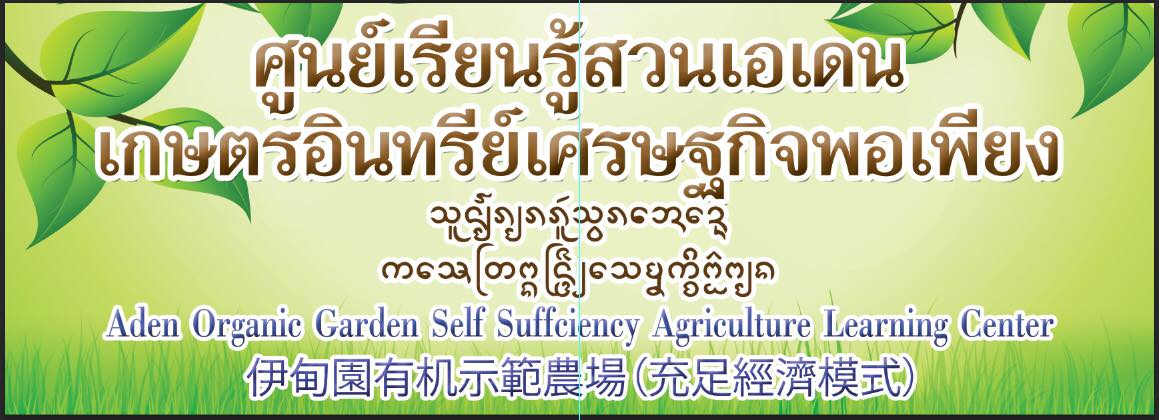
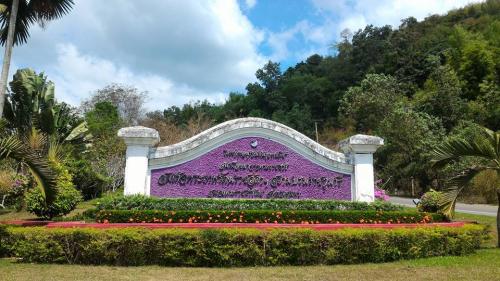
Eden Garden Learning Center, Organic Farming, Sufficiency Economy
Sub district Chom Mok Kaeo District Mae Lao Province Chiang Rai
Image
Weather
Closed
Business hours
• Sunday
: 09:00 - 16:00
• Monday
: 09:00 - 16:00
• Tuesday
: 09:00 - 16:00
• Wednesday
: 09:00 - 16:00
• Thursday
: 09:00 - 16:00
• Friday
: 09:00 - 16:00
• Saturday
: 09:00 - 16:00
Note
: -
Review Score
0
Availability
0
Value
0
Service
0
Read more >
Information
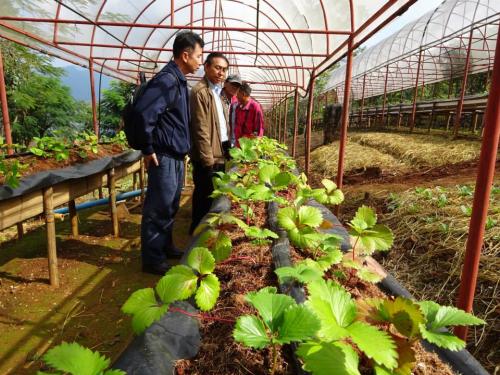
1. It is a learning center for the Garden of Eden, organic agriculture, sufficiency economy.
2. Making biogas for household use
3. Making organic fertilizer and making bio-fermented water
4. Using water buffalo to plow into a traditional way of life
5. Damping and restoring forests for water sources (forest planting)
6. Making pork pits, buffalo pits, chickens, etc.
7. Growing organic vegetables and organic fruits (mixture)
8. Fisheries
Source
Thailand Tourism Directory
Recommended
Entrance fees
• Entrance fees: Non-fee
• Remark : -
Review (0)
0
จาก 5.0
Availability
Value
Service
Relate Agritourism
Fruit buffet, making local rice crackers, weaving Khla mat, Lam Tud Dek
Rayong
Sufficiency Economy Philosophy House is a learning center of the new agriculture theory. Inside the integrated garden, is planting vegetables for household consumption adhering to the sufficiency economy philosophy of King Rama IX. It is also the pilot model of growing rice berry in the 400 plastic tanks that results in the 20 tanks of paddy, which is sufficient for consumption all year round. Later, numbers of villagers and foreigners visit this place. The lecturer is available to provide knowledge about the SEP to the students and interested people.
Chumphon
Thai Mangosteen Garden (Suan Khun Panya) has more than 300 mangosteen trees and various kinds of fruits, such as rambutan, durian and dragon fruit. It is an agro-tourism attraction where the visitors can come and enjoy the fruit buffet for 150 baht per person. This garden also has the homestay accommodation available.
Rayong
Phon Had Village is a sufficiency economy village, an organic vegetables source, organic rice, delicious insects, listening to vegetable lullabies as a source of fanaticism. The only place in Roi Et according to the Philosophy of Sufficient Economy. The village is famous for its delicious insects, excellent craftsmanship. Familiar with pesticide-free vegetables Muan I Lee Bun Bang Fai Tradition, worshipping the great god, the legend of Phraya Had Phraya Thon
Roi Et
Sirinat Rachinee Mangrove Ecosystem Learning Center is the first mangrove rehabilitation center from abandoned shrimp farms in Thailand. Originally, it was a shrimp farm located in the Pa Khlong Kao National Forest Reserve - Khlong Khoi, Pak Nam Pran Sub-district. Pranburi District Prachuap Khiri Khan. When the King Rama 9 and the Queen came to Pranburi, The Royal Forest Department responded by canceling the shrimp farming concession and then included as part of the Pak Nam Pranburi Forest Development Project. They accelerated the restoration of mangrove forests and designate them as target areas for reforestation and later develop into a mangrove ecosystem learning center.
Prachuap Khiri Khan
Enjoyable with the fullest tour of fruits buffet tasting such as durian, rambutan, mangosteen, longkong, on an area of ​​41,600 square meters. Watch a demonstration of durian harvesting and selling processed fruits.
Rayong
Doi Hang Temporary Prison under the Chiang Rai Central Prison Implementation of the Royal Initiative Project god nephew Prince Patcharakitiyapha in adopting the Sufficiency Economy Philosophy in prisons so that inmates can adopt the Sufficiency Economy Philosophy of His Majesty the King to actually use after the penalty. It is an encouragement for the inmates and also gives the inmates the opportunity to return to society with skills that can lead a self-reliant life without turning back to commit another crime. It is a learning center for sufficiency economy. Open for systematic visits and visits and is an important check-in point for tourists and the general public who come to use the service.
Chiang Rai
It is an agricultural tourist attraction. Learning resource for reducing high production costs from the use of chemical fertilizers. Deteriorate health cause disease to human life, therefore change the concept of improving the quality of production and reduce production costs through integrated pest prevention.
Chai Nat
King Bhumibol Adulyadej (King Rama IX) foresaw the significance of plant genetic conservation prior to a recognition of the terms “Biological Diversity” and “Conservation” in Thailand. During the trip to Klai Kang Won Palace, A. Hua Hin, Prachuap Khiri Khan Province in 1960, he passed through A. Tha Yang, Phetchaburi Province and noticed many Yang Na trees (Dipterocarpus alatus). Therefore, he had royal words to collect the seeds to plant at Phra Tamnak Piam Suk, Klai Kang Won Palace, and grow the seedlings at Royal Chitralada Projects to study. In 1985, King Rama IX gave a royal word to conserve jackfruit tress around the Grand Palace and initiated the plant conservation project in the palaces by tissue culture. Later in 1986, he had the royal idea to conserve and breed rattan palms and arrange the herbal garden in Royal Chitralada Projects area. Her Royal Highness Princess Maha Chari Sirindhorn carried on the plant conservation project by having the royal idea and asked Lord Chamberlain to carry out plant conservation project in June 1992, when the seed gene bank was formed, and study the preservation of non-industrial crops under the royal thought framework. In 1993, Mr. Sujin Phunikom, the Assistant Subdistrict Headman of Salui and Tha Sae District, Chumporn Province, and his group, cooperated with the Director of Ultra Products Co., Ltd. and the agriculturists in Chumporn Province to establish plant conservation project at the public area located at Moo.6, Salui District (presently Moo. 5 and 6, Salui District, and Moo.4 and 7, Song Phi Nong District). At the same time, the Royal Chitralada Projects was looking for the area to set up the Plant Genetic Conservation Project Under The Royal Initiative of Her Royal Highness Princess Maha Chari Sirindhorn. Subsequently, Royal Chitralada Projects represented by Professor Prachid Wamanont (the Consultant) and the team met with Chumporn Governor (Mr. Prayoon Promphan) to discuss about the project. The first five years, the project was named “Plant Conservation and Development Project Under The Royal Initiative of Her Royal Highness Princess Maha Chari Sirindhorn, Chumporn Province”. Chumporn Provincial Agricultural Extension proposed the project for the approval from Chumporn Governor and submit the project documents to the Director of Royal Chitralada Projects to respectfully inform to Her Royal Highness Princess Maha Chari Sirindhorn on 26 April 1993. Moreover, Plant Conservation and Development Project was integrated with the royal plant genetic conservation project, which Dr. Pisit Wora-urai was a Chairman. The executives meeting on 9 July 1997 had the resolution to change the project’s name from “Plant Conservation and Development Project Under The Royal Initiative of Her Royal Highness Princess Maha Chari Sirindhorn, Chumporn Province” to “Plant Genetic Conservation Project Under The Royal Initiative of Her Royal Highness Princess Maha Chari Sirindhorn”
Chumphon
It is organized as a learning point station in a systematic way such as 1.1. Orchid seed service station and an orchid seed room 1.2. Planting station for various orchid species and increasing the value of orchids 1.3. Ornamental plant planting and propagation station 1.4. Biological production (Trichoderma Beauveria BT), composting does not return to the pile of Mae Jo formula. 1.5. Earthworm, cricket and sloping station 1.6. Hydroponics and Sky Vegetable Planting Station 1.7. Various types of mushroom cultivation stations 1.8. Plant seedling cultivation station and food processing from mushrooms 1.9. Different types of fruit plant propagation stations 1.10. Integrated Agricultural Station according to the Sufficiency Economy Philosophy (can be adjusted as appropriate)
Samut Sakhon