คำค้นยอดฮิต: ข้าวเหนียวมะม่วง ของขวัญออแกนิค ผลไม้สด
TH | EN
฿ 0.00
Mae La Noi Royal Project
Sub district Huai Hom District Mae La Noi Province Mae Hong Son
Image
Image
Image
Image
Weather
Closed
Business hours
• Sunday
: 09:00 - 16:00
• Monday
: 09:00 - 16:00
• Tuesday
: 09:00 - 16:00
• Wednesday
: 09:00 - 16:00
• Thursday
: 09:00 - 16:00
• Friday
: 09:00 - 16:00
• Saturday
: 09:00 - 16:00
Note
: -
Review Score
0
Availability
0
Value
0
Service
0
Read more >
Information
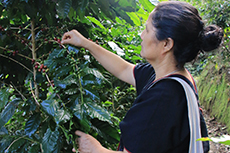
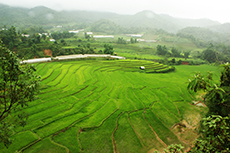
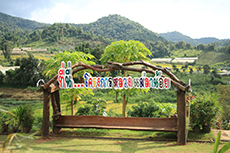
It is an agritourism attraction that is still natural and pure. It is also warm with the beautiful way of life of the hill tribes. During September to October is the rice farming season which is suitable period to visit.
Source
Thailand Tourism Directory
Recommended
Entrance fees
• Entrance fees: Non-fee
• Remark : -
Review (0)
0
จาก 5.0
Availability
Value
Service
Relate Agritourism
King Bhumibol Adulyadej (King Rama IX) foresaw the significance of plant genetic conservation prior to a recognition of the terms “Biological Diversity” and “Conservation” in Thailand. During the trip to Klai Kang Won Palace, A. Hua Hin, Prachuap Khiri Khan Province in 1960, he passed through A. Tha Yang, Phetchaburi Province and noticed many Yang Na trees (Dipterocarpus alatus). Therefore, he had royal words to collect the seeds to plant at Phra Tamnak Piam Suk, Klai Kang Won Palace, and grow the seedlings at Royal Chitralada Projects to study. In 1985, King Rama IX gave a royal word to conserve jackfruit tress around the Grand Palace and initiated the plant conservation project in the palaces by tissue culture. Later in 1986, he had the royal idea to conserve and breed rattan palms and arrange the herbal garden in Royal Chitralada Projects area. Her Royal Highness Princess Maha Chari Sirindhorn carried on the plant conservation project by having the royal idea and asked Lord Chamberlain to carry out plant conservation project in June 1992, when the seed gene bank was formed, and study the preservation of non-industrial crops under the royal thought framework. In 1993, Mr. Sujin Phunikom, the Assistant Subdistrict Headman of Salui and Tha Sae District, Chumporn Province, and his group, cooperated with the Director of Ultra Products Co., Ltd. and the agriculturists in Chumporn Province to establish plant conservation project at the public area located at Moo.6, Salui District (presently Moo. 5 and 6, Salui District, and Moo.4 and 7, Song Phi Nong District). At the same time, the Royal Chitralada Projects was looking for the area to set up the Plant Genetic Conservation Project Under The Royal Initiative of Her Royal Highness Princess Maha Chari Sirindhorn. Subsequently, Royal Chitralada Projects represented by Professor Prachid Wamanont (the Consultant) and the team met with Chumporn Governor (Mr. Prayoon Promphan) to discuss about the project. The first five years, the project was named “Plant Conservation and Development Project Under The Royal Initiative of Her Royal Highness Princess Maha Chari Sirindhorn, Chumporn Province”. Chumporn Provincial Agricultural Extension proposed the project for the approval from Chumporn Governor and submit the project documents to the Director of Royal Chitralada Projects to respectfully inform to Her Royal Highness Princess Maha Chari Sirindhorn on 26 April 1993. Moreover, Plant Conservation and Development Project was integrated with the royal plant genetic conservation project, which Dr. Pisit Wora-urai was a Chairman. The executives meeting on 9 July 1997 had the resolution to change the project’s name from “Plant Conservation and Development Project Under The Royal Initiative of Her Royal Highness Princess Maha Chari Sirindhorn, Chumporn Province” to “Plant Genetic Conservation Project Under The Royal Initiative of Her Royal Highness Princess Maha Chari Sirindhorn”
Chumphon
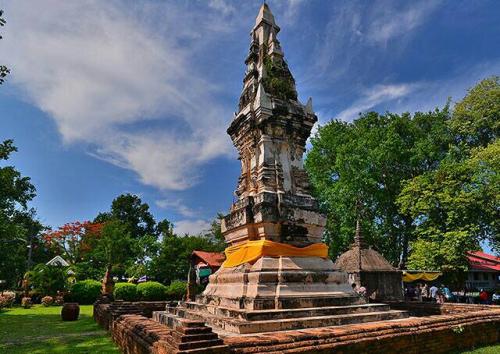
Phra That Kuchan Located within the Ban Ku Chan Temple is an important sanctuary. People of Yasothon and nearby provinces pay their respects. The appearance is a square lotus-shaped chedi, shaped like Phra That Phanom, but smaller. The part of the lower base in the shape of an inverted lotus is a low facing lotus. Supporting a flat rectangular high base connected with a square lotus shape decorated with exquisite and beautiful patterns in ancient times. and the top of the relic in a square shape, which supports the tiered top From the evidence, it should be built according to the general motto of building relics, namely, to contain the Buddha's relics. Each year, a water bathing ceremony is held to preserve the good traditions. Architectural features: Phra That Ku Chan, width 5.10 meters, height 15 meters. Location is located at Ban Ngew. In the middle of the courtyard of Wat Ku Chan, Ku Chan Subdistrict, Kham Khuean Kaeo District, Yasothon Province which looks similar to Phra That Phanom. The only difference is the size that Phra That Ku Jan is smaller. Significance to the community: It is a place of worship for the people of Yasothon and nearby provinces. Every year, the people of Ku Chan sub-district will bring water, perfumes to bathe the relics in the morning of the full moon of the 6th month. In the afternoon, they go to bathe the water ceremony. Ku" after that, they will take them to Nong Sa Phang to bring water from Nong Sa Phang to perform the ceremony Pouring water on relics and bai sema which this ritual must be done annually There is a belief that if the ceremony is not performed, it will cause rain out of season; the villagers of Gu Zhan therefore practice this ritual regularly.
Yasothon
It is an area that connects to Khao Yai National Park; thus, this area has an abundance of nature. And, the villagers here make seasonal orchards, and it is suitable for natural tourism .There is also a tree dug around, selling various seedlings and a camping ground
Saraburi
The villagers of Ban Na Ton Chan have a traditional way of life mixed farming. There is mud fermented cloth which made into a good weight fabric. It is beautiful with mud fermentation and intricate weaving. Villagers have adjusted the area for camping. Raise the bamboo litter to make a seat for eating, make a toilet, the rest is still in the same condition as before. This mountain ridge has beautiful scenery. Visitors can watch the sunrise and sunset at the same point. There are about 23 homestays in Ban Na Ton Chan, living separately or in the same house as the owner of the house. Visitors can indulge in the nature around the accommodation with a fully equipped kitchen, they can buy food, cook, and eat comfortably. There are cycling activities to see the way of life in the village. See orchards and fields with a community guide and visit the fruit orchards of the villagers are some activities. Tourism program : - Stay at Baan Na Ton Chan homestay which currently has a total of 23 houses. - Biking to see the way of life in the village, visiting fruit orchards and fields. - Watch how to make mud fermented cloth, weaving by hand, Yok Dok cloth, and buying ready-made mud fermented fabrics. - See how to make a barn doll (Ban Ta Wong) - See stump handicrafts - See and taste seasonal fruits such as durian, rambutan, longkong, mango, maprang, mafai, longan. - View point "Huai Ton Hai" to watch the sea of ​​mist and the sun - Watch and test how to cook rice and local food, and sip coffee in a bamboo tube. Route links with other attractions: - Si Satchanalai Historical Park Si Satchanalai District, 30 kilometers - Antique gold shop, antique silver shop 30 kilometers - Namtok Pa Kha National Park 70 kilometers - Sukhothai Historical Park (Old Town Sukhothai) 77 kilometers - Ramkhamhaeng National Park 110 km.
Sukhothai
Khung Bang Kachao is a part of the curved area of Chao Phraya River. Its shape is like a pig's stomach, covering wide areas of ​​6 sub-districts of Phra Pradaeng District, Samut Prakan Province. Including Bang Ka Chao, Bang Nam Phueng, Bang Ko Bua, Bang Krasao, Bang Yo, and Song Khanong, in which the area ​​approximately is 19,200,000 square meters. On September 14th, 1977, a cabinet resolution was made to designate ""Khung Bang Ka Chao"" as the green area being suitable for cultivation without permission to construct buildings more than the regulative height. In 2006, Time magazine praised Bang Krachao as The best Urban Oasis of Asia, also known as the best lung among the urban in Asia. Even though many decades go by, this place is still considered as the ""lung"" to efficiently purify the air in Bangkok and Samut Prakan. Agricultural activities in Khung Bang Kachao area will be a bike ride through the green space that is becoming a popular activity Because it is like an oasis that gives an oxygen for the city with the garden area around 320,000 square meters. There are many types of large trees and banyan roots covering with spectacular tree tunnels that make there shady and relaxing. There is also an interesting agricultural lifestyle and local wisdom, and stopover spaces to do the activity with farmers and community enterprise groups Program tour 1. Visit the golden mango orchard (Nam Dok Mai Khung Bang Kachao, the latest Thai GI mango) by Lt. Col. Chamnan Onyam, the President of Golden Mango Producer Club in Samut Prakan, the President of Community Enterprise, Colonel Agriculture and the owner of the golden mango orchard in Khung Bang Kachao area. He becomes the expert to give an information and sell the product and scion. 2. Visit an ornamental plantation (Golden croton, Sealing-wax palm, and Cordyline) leading by Ajarn Narong Samleerat, the chairman of Learning Center for Enhancement of Agricultural Production, Phra Pradaeng District and Ajarn Somsak Samleerat, the agricultural philosopher. They become speakes to give an information and sell the trees. 3. Visit the integrated agricultural garden, Smart Farmer in Bang Kachao Subdistrict 4. Community enterprise for Health Sciences Activities, including massage with herbal compress, showing how to make herbal compress balls, and selling neck pillows, cereal belts, compresses, shoulder pillows and acupressure pillows. 5. Herbal Fragrant Incense House Community Enterprise with herbal incense making, tie-dye fabric making, and homestay service Linked routes with other tourist attractions (Every place is within Kung Bang Kachao. Phra Pradaeng District Samut Prakan Province) - Bang Nam Phueng Floating Market, Bang Nam Phueng Subdistrict - Sri Nakhon Khuean Khan Park and Botanical, Bang Kachao Subdistrict - Siamese Fighthing Fish Gallery, Bang Kachao Subdistrict - Bird Watching Tower, Bang Kachao Subdistrict - Boat Museum, Bang Ko Bua Subdistrict - Bangkachao vegetable warehouse Community enterprise products - Health Craft Community Enterprise, such as, neck pillows, cereal belts, compresses, shoulder pillows, and acupressure pillows - Herbal Incense House Community Enterprise, such as, fragrant incense, and tie dye crafts (bags, clothes, and scarves) - Coconut sugar - Ornamental plants, such as Golden croton, Sealing-wax palm Cordyline, limes' scions, etc. - Fruit trees, such as mangos, mangos' scions, limes, limes' scions, etc. - Arts and crafts from community enterprises, such as auspicious wood from lucky stones, flowers from fish scales, and flowers from gossamer fabrics.
Samut Prakarn
The plot collects more than 100 types of fragrant plants and herbs from the northeastern region.
Nong Khai
It is an organic farming learning center of Sip Et Sok Subdistrict. The general public can contact for visiting.
Chachoengsao
It is a beautiful, shady fruit garden. The uniqueness of the taste of fruit, whether it is durian, rambutan, mangosteen and longkong, is why the owner of the garden has emphasized that this place has quality fruits. Its quality is at the GAP level by adopting a good quality farming system into production. The GAP system itself helps to increase the quality of productivity and safe for consumers, including the farmers themselves. Because the GAP system controls the use of chemicals to a level that is safe for consumers. Therefore, consumers or tourists can rest assured that they are safe and secure.
Rayong
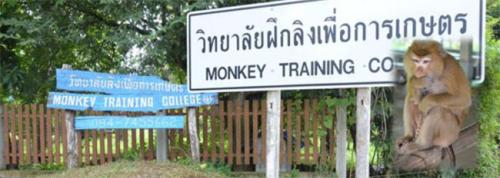
high altitude research and training station used as a plot to study and experiment on plants It is a place for internships for students both inside and outside the institute and as a place to study nature. to people who are interested in general
Chiang Mai
Sirinat Rachinee Mangrove Ecosystem Learning Center is the first mangrove rehabilitation center from abandoned shrimp farms in Thailand. Originally, it was a shrimp farm located in the Pa Khlong Kao National Forest Reserve - Khlong Khoi, Pak Nam Pran Sub-district. Pranburi District Prachuap Khiri Khan. When the King Rama 9 and the Queen came to Pranburi, The Royal Forest Department responded by canceling the shrimp farming concession and then included as part of the Pak Nam Pranburi Forest Development Project. They accelerated the restoration of mangrove forests and designate them as target areas for reforestation and later develop into a mangrove ecosystem learning center.
Prachuap Khiri Khan
Baan Suan Akira was established as a learning center. This project is due to the royal Initiative of His Majesty King Bhumibol Adulyadej Maha Bhumibol Adulyadej the Great with the philosophy of sufficiency economy. Local people can apply the concepts and practices in their living. The learning resources are as follows; 1. Learning Center due to the royal Initiative project, Pai District, Mae Hong Son 2. New Theory Agriculture Learning Center, Pai District, Mae Hong Son 3. Sufficiency Economy Learning Center, Pai District, Mae Hong Son 4. Learning Center for Enhancement of Agricultural Product Production in farming, mixed farming, livestock, and fishery 5. Prototype plot for organic plant production of Mae Hong Son 6. Agro-tourism according to The OTOP Nawat Withi Tourism Community Project 7. Land Development Technology Transfer Center of Mae Hi Sub-district 8. Khok Nong Na Learning Center Model, Baan Suan Akira
Mae Hong Son
Community Enterprise, Fruits Quality Promotion Group Phato Sub-district, Phato District, Chumporn Province operates agrotourism by networking with the tourism groups in Phato District. Activities available here are rafting, garden touring, fruit tasting, trekking, and visiting a waterfall. Besides, traditional food tasting, such as orange curry with banana stalk and pork belly, stir-fried Liang leaves with egg, rice in bamboo, and traditional coffee tasting.
Chumphon