คำค้นยอดฮิต: ข้าวเหนียวมะม่วง ของขวัญออแกนิค ผลไม้สด
TH | EN
฿ 0.00
Ban Santitham
Sub district Lat Krathing District Sanam Chai Khet Province Chachoengsao
Image
Image
Image
Image
Weather
Closed
Business hours
• Sunday
: 09:00 - 16:00
• Monday
: 09:00 - 16:00
• Tuesday
: 09:00 - 16:00
• Wednesday
: 09:00 - 16:00
• Thursday
: 09:00 - 16:00
• Friday
: 09:00 - 16:00
• Saturday
: 09:00 - 16:00
Note
: -
Review Score
0
Availability
0
Value
0
Service
0
Read more >
Information
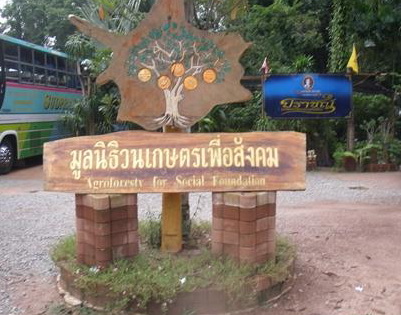
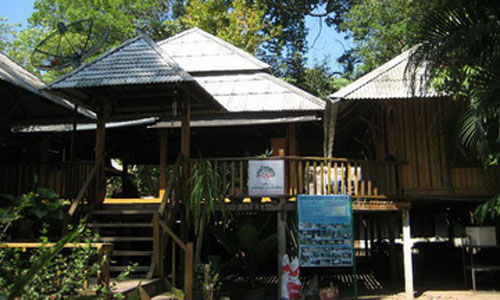
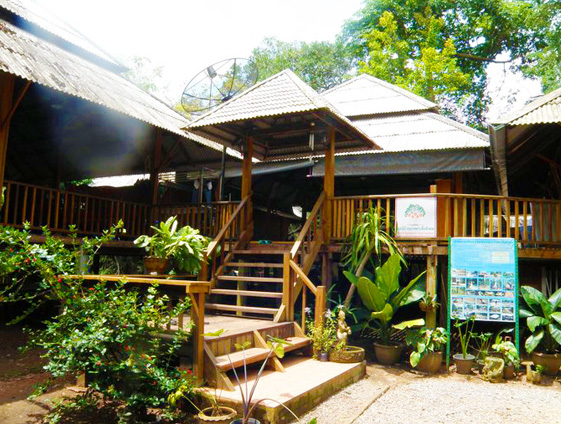
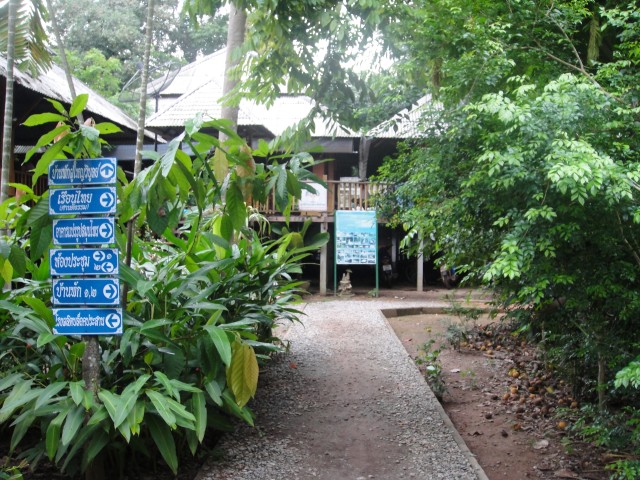
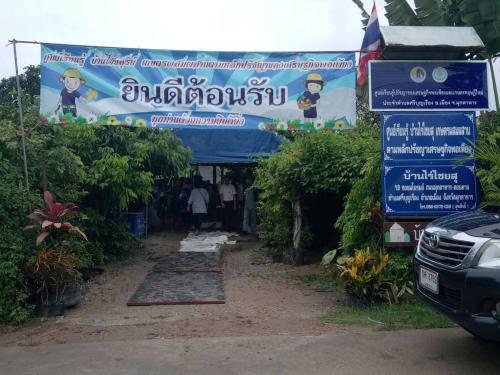
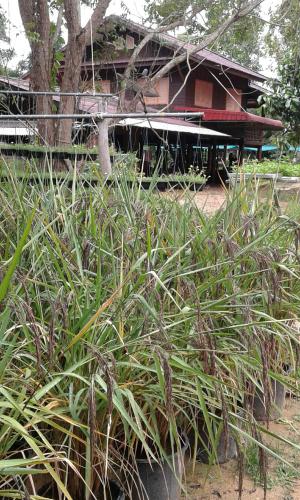
Ban Santitham is located on the area of 16,000 square meters with more than 700 kind of healing herbs spread over the area. There is also a Thai wooden house which is used to exhibit a variety of ancient agricultural tools, and there is a barn, rice threshing and rice milling equipment display behind the house. In addition, a part of the house is reserved for youth camp with the space for recreation activities.
Source
Thailand Tourism Directory
Recommended
Entrance fees
• Entrance fees: Non-fee
• Remark : -
Review (0)
0
จาก 5.0
Availability
Value
Service
Relate Agritourism
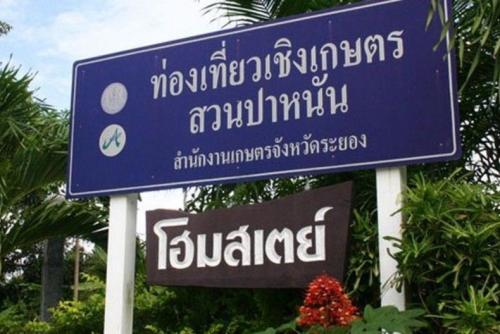
Thai Mangosteen Garden (Suan Khun Panya) has more than 300 mangosteen trees and various kinds of fruits, such as rambutan, durian and dragon fruit. It is an agro-tourism attraction where the visitors can come and enjoy the fruit buffet for 150 baht per person. This garden also has the homestay accommodation available.
Rayong
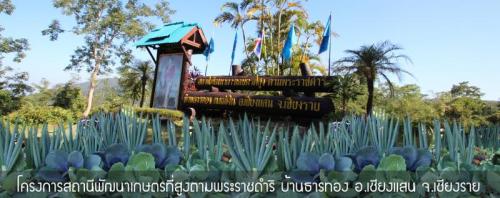
King Bhumibol Adulyadej (King Rama IX) foresaw the significance of plant genetic conservation prior to a recognition of the terms “Biological Diversity” and “Conservation” in Thailand. During the trip to Klai Kang Won Palace, A. Hua Hin, Prachuap Khiri Khan Province in 1960, he passed through A. Tha Yang, Phetchaburi Province and noticed many Yang Na trees (Dipterocarpus alatus). Therefore, he had royal words to collect the seeds to plant at Phra Tamnak Piam Suk, Klai Kang Won Palace, and grow the seedlings at Royal Chitralada Projects to study. In 1985, King Rama IX gave a royal word to conserve jackfruit tress around the Grand Palace and initiated the plant conservation project in the palaces by tissue culture. Later in 1986, he had the royal idea to conserve and breed rattan palms and arrange the herbal garden in Royal Chitralada Projects area. Her Royal Highness Princess Maha Chari Sirindhorn carried on the plant conservation project by having the royal idea and asked Lord Chamberlain to carry out plant conservation project in June 1992, when the seed gene bank was formed, and study the preservation of non-industrial crops under the royal thought framework. In 1993, Mr. Sujin Phunikom, the Assistant Subdistrict Headman of Salui and Tha Sae District, Chumporn Province, and his group, cooperated with the Director of Ultra Products Co., Ltd. and the agriculturists in Chumporn Province to establish plant conservation project at the public area located at Moo.6, Salui District (presently Moo. 5 and 6, Salui District, and Moo.4 and 7, Song Phi Nong District). At the same time, the Royal Chitralada Projects was looking for the area to set up the Plant Genetic Conservation Project Under The Royal Initiative of Her Royal Highness Princess Maha Chari Sirindhorn. Subsequently, Royal Chitralada Projects represented by Professor Prachid Wamanont (the Consultant) and the team met with Chumporn Governor (Mr. Prayoon Promphan) to discuss about the project. The first five years, the project was named “Plant Conservation and Development Project Under The Royal Initiative of Her Royal Highness Princess Maha Chari Sirindhorn, Chumporn Province”. Chumporn Provincial Agricultural Extension proposed the project for the approval from Chumporn Governor and submit the project documents to the Director of Royal Chitralada Projects to respectfully inform to Her Royal Highness Princess Maha Chari Sirindhorn on 26 April 1993. Moreover, Plant Conservation and Development Project was integrated with the royal plant genetic conservation project, which Dr. Pisit Wora-urai was a Chairman. The executives meeting on 9 July 1997 had the resolution to change the project’s name from “Plant Conservation and Development Project Under The Royal Initiative of Her Royal Highness Princess Maha Chari Sirindhorn, Chumporn Province” to “Plant Genetic Conservation Project Under The Royal Initiative of Her Royal Highness Princess Maha Chari Sirindhorn”
Chumphon
In the past, the Phu Ruea High Altitude Agricultural Experiment Station was to test the winter fruit varieties for planting in the northeastern highlands, including apple cultivars. and peach varieties for eating fresh In addition, Phu Ruea High Land Agricultural Experiment Station has also made efforts to collect and study grape varieties for making wine, including grapes for eating fresh, to develop varieties and encourage farmers in Loei Province to continue planting.
Loei
Suphanburi Banana Conservation Center: It is a sufficiency agricultural community enterprise, responsible for the conservation of rare banana species in Thailand; and it has collected up to 108 banana species, especially the species of Suphan Buri itself.
Suphan Buri
It is organized as a learning point station in a systematic way such as 1.1. Orchid seed service station and an orchid seed room 1.2. Planting station for various orchid species and increasing the value of orchids 1.3. Ornamental plant planting and propagation station 1.4. Biological production (Trichoderma Beauveria BT), composting does not return to the pile of Mae Jo formula. 1.5. Earthworm, cricket and sloping station 1.6. Hydroponics and Sky Vegetable Planting Station 1.7. Various types of mushroom cultivation stations 1.8. Plant seedling cultivation station and food processing from mushrooms 1.9. Different types of fruit plant propagation stations 1.10. Integrated Agricultural Station according to the Sufficiency Economy Philosophy (can be adjusted as appropriate)
Samut Sakhon
Phra That Yasothon or Phra That Anon located in front of the ubosot; it is one of the important old relics in the northeastern region. It has Rectangular chedi with a top similar to Phra That Phanom, and inside the Phra That contains the relics of Phra Anon. The construction was influenced by Laos art that was popularly built during the late Ayutthaya period to the early Rattanakosin period which corresponds to the history of setting up the city and the history of Wat Mahathat
Yasothon
The ancient 200-year-old garden utilizes the resources for the long-term highest benefits. It is located at No. 5 Moo 11, Laem Sai Sub-district, Lang Suan District, Chumphon Province, about 2 kilometers from Lung Suan Market. Samroeng Rajavate, the fourth generation of the family, is a current caretaker. This is the mixed garden, where various fruits are grown in the same area. Whether Local Durian, Mangosteen, Local Rambutan, Langsat, Betel Nut, Coconut, Nutmeg, Sato, Lukniang, Sapodilla, Champa, Jackfruit, Mafai, Banana, Homegrown Vegetables, and Herbs. Without the use of chemical fertilizers to accelerate growth. The soil is treated by growing the grass to nourish the soil moisture throughout the year. Natural fertilizer is used, such as dead leaves and annual crop residues. For pest control, birds, squirrels, and tree shrews are eating worms and insects as food. The cost includes the labor cost during harvesting season to cut grass to facilitate the harvest and at the area to plant the trees that will be repaired.
Chumphon
Enjoyable with the fullest tour of fruits buffet tasting such as durian, rambutan, mangosteen, longkong, on an area of ​​41,600 square meters. Watch a demonstration of durian harvesting and selling processed fruits.
Rayong
Indulge with a seasonal fruits buffet such as durian, rambutan, mangosteen, along with local food services.
Rayong
Non-toxic agricultural crops camping service. You can ride a bicycle and see the beautiful surrounding scenery.
Phayao
Little House in the Big Wood is a learning center of sufficiency economy philosophy. It was established by the new generation of agriculturists who would like to inherit sufficient agriculture. By applying a house and garden as the learning center for visitors.
Chumphon
Experience the local wisdom of the people in the community, and learn about Sufficiency Economy Philosophy.
Ubon Ratchathani