คำค้นยอดฮิต: ข้าวเหนียวมะม่วง ของขวัญออแกนิค ผลไม้สด
TH | EN
฿ 0.00
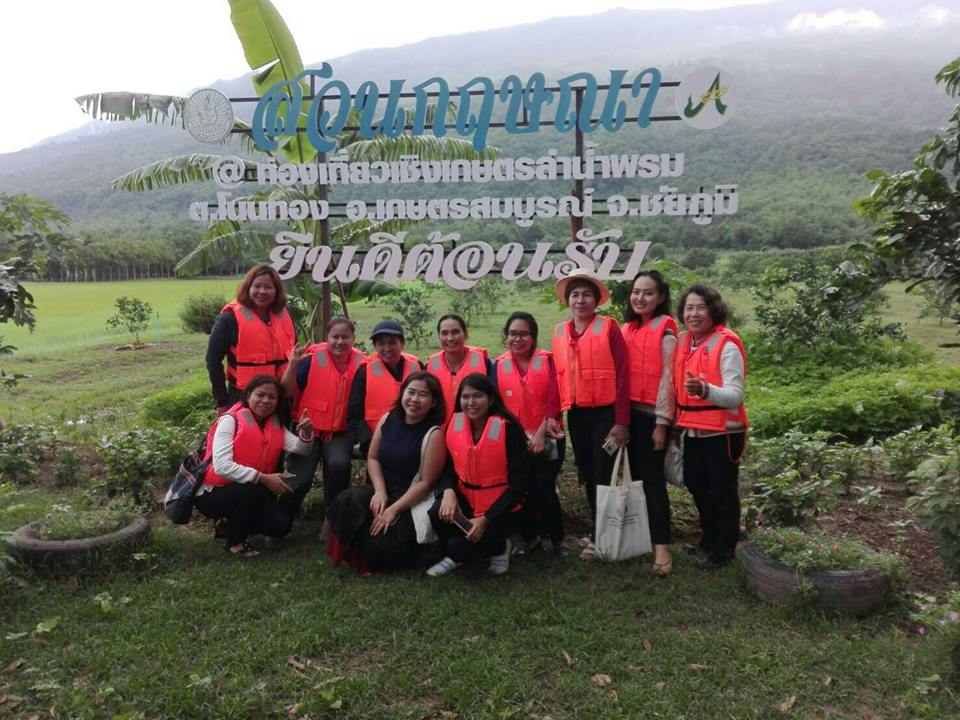
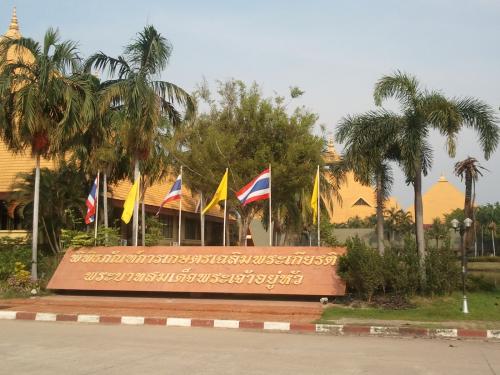
Phrom River Agricultural Tourism
Sub district Non Thong District Kaset Sombun Province Chaiyaphum 36120
Image
Image
Image
Image
Weather
Closed
Business hours
• Sunday
: 09:00 - 16:00
• Monday
: 09:00 - 16:00
• Tuesday
: 09:00 - 16:00
• Wednesday
: 09:00 - 16:00
• Thursday
: 09:00 - 16:00
• Friday
: 09:00 - 16:00
• Saturday
: 09:00 - 16:00
Note
: -
Review Score
0
Availability
0
Value
0
Service
0
Read more >
Information
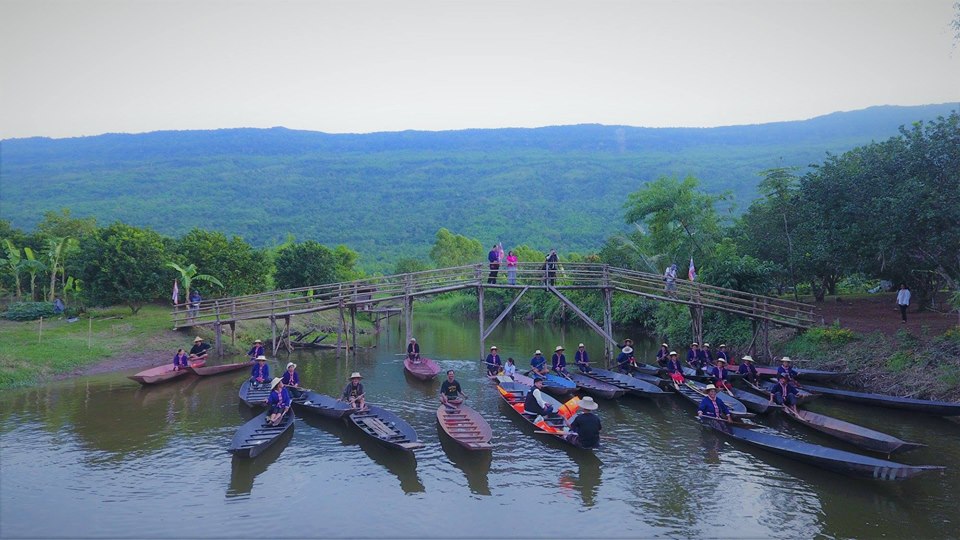
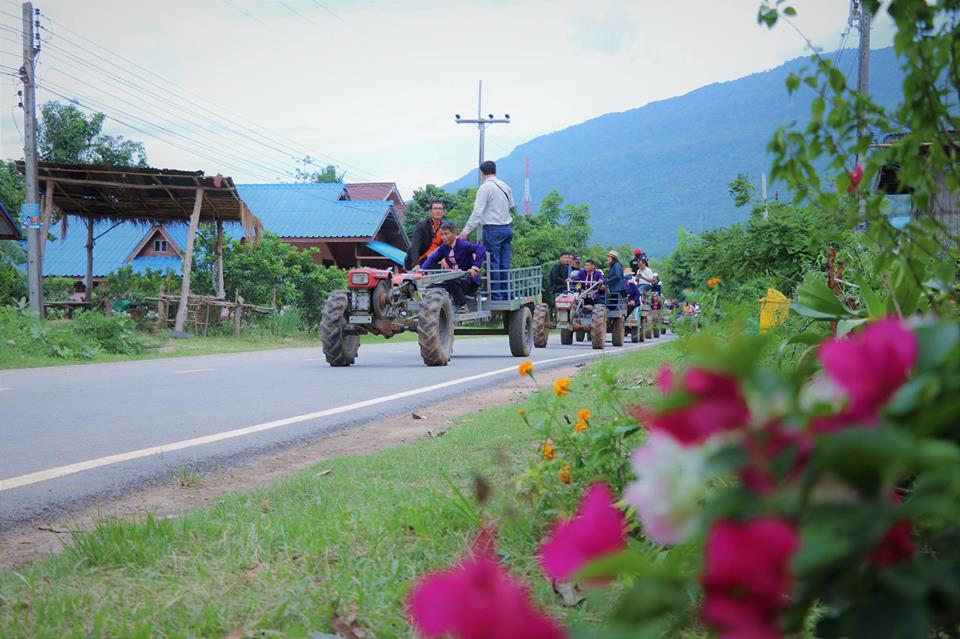
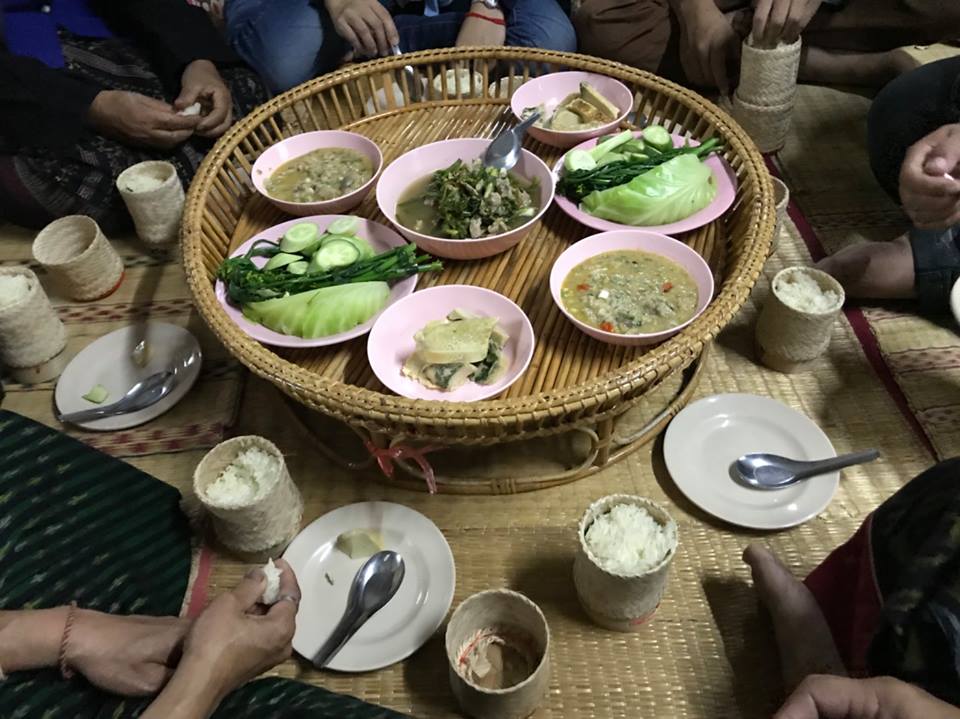
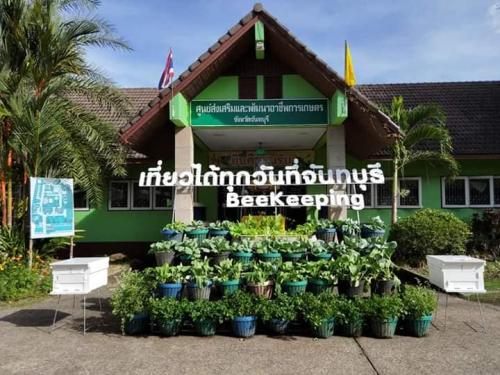
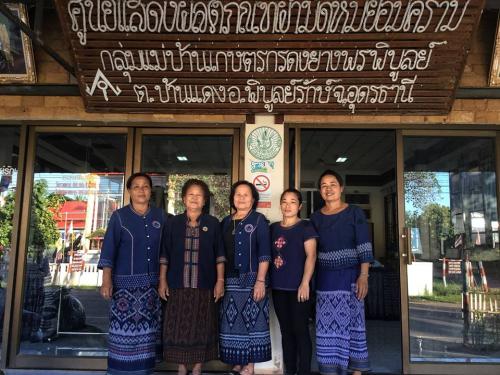
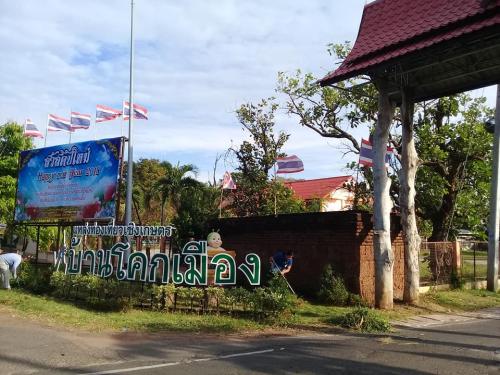
The agricultural tourism is run by the community. There are several activities which are riding tractor to the pier, rowing a boat, seeing the pomelo orchard, learning about planting, tasting the pomelo, eating the local food, watching the shows ,and homestay.

Travel Programs
1. 1 day costs 350 baht per person: welcoming tourists, riding a tractor, riding a boat, enjoying the nature, visiting pomelo orchard, having meals, buying orchard products, sending tourists back
2. 2 days 1 night costs 990 baht per person:
The first day: welcoming tourists, guiding to the agricultural tourism learning center, having dinner at visitor reception center, attending the Bai Sri Su Kwan ceremony, watching the shows of local children, joining activities, and staying at homestay
The second day: having breakfast at visitor reception center, buying souvenirs, and sending tourists back

Other near attractions
1. Hat Nam Phrom - 5 kilometers far
2. Kaeng Tad Sai - 9 kilometers far
Source
Thailand Tourism Directory
Recommended
Entrance fees
• Entrance fees: Non-fee
• Remark : -
Review (0)
0
จาก 5.0
Availability
Value
Service
Relate Agritourism
- Watch the fish and mussels raising in cages, - Cultivation of seagrass - Study mangrove ecosystem - Processing of salted fish with nets/sea food - Toei Panan Weaving tourism program - Arrive at the group office. Listen to a briefing on the history of Ban Pru Jude Cage Fish Farming Community Enterprise - Learn how to raise aquatic animals in cages - Take a boat trip to see the mangrove ecosystem. Study mangrove forests, hot springs, visit Boonkong Bay, plant seagrass to conserve food for dugongs in the Trang sea, visit various islands, beaches, return to the accommodation, have dinner, see the community's way of life in the morning. Seafood Processing Group, Kang Mung Salted Fish, Toei Panan Basketry Group, buy souvenirs, Travelling back Route links with other attractions (with distance/km) - Pak Meng Beach 8 km. - Hua Hin Beach 3 km. - Rajamangala Beach 6 km. Note: The distance measurement is taken from the point of the group office as a starting point Community enterprise products in the community Agricultural products, seafood, salted fish with nets Toei Panan wicker products
Trang
Kho Khun Nong Haen Group is a new agricultural attraction for livestock in Yasothon province; by opening a farm to welcome tourists to experience the lifestyle of a community of successful fattening cattle herders at the national level. Show the knowledge of cattle that are raised like a beloved pet as well as providing knowledge on the integration of groups and raising fattening cattle to generate income. Tourists can go for a day trip or stay overnight in the form of a homestay. In addition, there are beef cattle for sale to tourists who are interested in cooking at home at an affordable price.
Yasothon
King Bhumibol Adulyadej (King Rama IX) foresaw the significance of plant genetic conservation prior to a recognition of the terms “Biological Diversity” and “Conservation” in Thailand. During the trip to Klai Kang Won Palace, A. Hua Hin, Prachuap Khiri Khan Province in 1960, he passed through A. Tha Yang, Phetchaburi Province and noticed many Yang Na trees (Dipterocarpus alatus). Therefore, he had royal words to collect the seeds to plant at Phra Tamnak Piam Suk, Klai Kang Won Palace, and grow the seedlings at Royal Chitralada Projects to study. In 1985, King Rama IX gave a royal word to conserve jackfruit tress around the Grand Palace and initiated the plant conservation project in the palaces by tissue culture. Later in 1986, he had the royal idea to conserve and breed rattan palms and arrange the herbal garden in Royal Chitralada Projects area. Her Royal Highness Princess Maha Chari Sirindhorn carried on the plant conservation project by having the royal idea and asked Lord Chamberlain to carry out plant conservation project in June 1992, when the seed gene bank was formed, and study the preservation of non-industrial crops under the royal thought framework. In 1993, Mr. Sujin Phunikom, the Assistant Subdistrict Headman of Salui and Tha Sae District, Chumporn Province, and his group, cooperated with the Director of Ultra Products Co., Ltd. and the agriculturists in Chumporn Province to establish plant conservation project at the public area located at Moo.6, Salui District (presently Moo. 5 and 6, Salui District, and Moo.4 and 7, Song Phi Nong District). At the same time, the Royal Chitralada Projects was looking for the area to set up the Plant Genetic Conservation Project Under The Royal Initiative of Her Royal Highness Princess Maha Chari Sirindhorn. Subsequently, Royal Chitralada Projects represented by Professor Prachid Wamanont (the Consultant) and the team met with Chumporn Governor (Mr. Prayoon Promphan) to discuss about the project. The first five years, the project was named “Plant Conservation and Development Project Under The Royal Initiative of Her Royal Highness Princess Maha Chari Sirindhorn, Chumporn Province”. Chumporn Provincial Agricultural Extension proposed the project for the approval from Chumporn Governor and submit the project documents to the Director of Royal Chitralada Projects to respectfully inform to Her Royal Highness Princess Maha Chari Sirindhorn on 26 April 1993. Moreover, Plant Conservation and Development Project was integrated with the royal plant genetic conservation project, which Dr. Pisit Wora-urai was a Chairman. The executives meeting on 9 July 1997 had the resolution to change the project’s name from “Plant Conservation and Development Project Under The Royal Initiative of Her Royal Highness Princess Maha Chari Sirindhorn, Chumporn Province” to “Plant Genetic Conservation Project Under The Royal Initiative of Her Royal Highness Princess Maha Chari Sirindhorn”
Chumphon
Phra That Kong Khao Noi is located in the rice fields of Tambon Tat Thong; it is an old chedi in the Khmer period, built in the 23rd-25th Buddhist century, corresponding to the late Ayutthaya period. It is located in the area of Wat Phra That Kong Khao Noi which was originally just a rice field in Tambon Tat Thong Phra That Kong Khao Noi is a brick and cement chedi. The shape is strange from the general pagoda is characterized as a rice hull. The Phra That is a rectangular chedi with three wooden indented corners. The square base is 2 meters wide on each side and raised about 1 meter in height. Next to this part is the top of the chedi, which is gradually approaching each other, while the outer peak of Phra That Kong Khao Noi is surrounded by a brick wall measuring 55 meters in size. In addition, behind the relics there is a Buddha image made of bricks. The villagers regarded it as very sacred. And in the fifth month, people come to bathe the Buddha image and cover it with gold. It is believed that if this were not done, the rain would have dried up that year. Also in the area of Ban Tad Thong, the Fine Arts Department has excavated the stories of prehistoric humans by discovering human skeletons in prehistoric times and painted utensils in Ban Chiang style
Yasothon
The perfect combination between a Historic River and Agro-Tourism, ""Cruising along the Maha Sawat canal and the beautiful orchard sceneries."" Changing the natural capital to be a perfect agricultural tourism. The agro tourism ""Cruising along the Maha Sawat canal and the beautiful sceneries"" was initiated from the concept of bringing the way of life of farmers who are doing routine of working together with the existing ""natural capital"", the resources of agriculture, gardening, farming, plowing, which parents, grandparents, and grandparents carry on until this generation. To adapt with what is available in the area, Khlong Khut Maha Sawat, historic canal that King Mongkut (Rama IV) graciously digs for a route for His Majesty to worship Phra Pathom Chedi. It took 5 years to complete the excavation, from 1855 to 1860. Khlong Khut Maha Sawat is 27 kilometers long from Bangkok to Tha Chin River and has many stories about the canal, such as the King's request to build 7 pavilions along the canal, for example the City Hall (Sala Klang Subdistrict Nonthaburi Province), Sala Thammasop (Taweewattana District, Bangkok), Salaya and Sala Din, which are in Phutthamonthon District. In addition, there are people using the last name beginning and ending with the word ""Sawat"" about 68 surnames such as Sawat Daeng, Sawatjun, Sawatsoradet, Sawatnam, Sawatdee Me, Desawad, etc. tourism program One Day Trip Point 1 going to the pier at Suwannaram Temple with welcome farmers to lead tourists to various spots Point 2 Watching the Gac Processing and the story before it came to be Yentafo Fak Rice and healthy gac juice Point 3 Visiting Na Bua Luang Cut Dok to learn how to make lotus Rowing a boat to collect lotus in the middle of the swamp Learn to fold lotus petals. Point 4 Visiting the miracle of Thai rice. Point 5 Orchid Garden Visit an orchid garden and cultivate various orchid species. Point 6 Visiting the fruit orchards, mixed farming fields, and tasting seasonal fruits. Taking an E-Tak car ride to see the garden and plots of rice fields Route links with other attractions (with distance/km) Jesada Technik Museum Nakhon Chai Si District, 21 kilometers distance - Thana Market, Nakhon Chai Si District, 25 kilometers distance - Don Wai Floating Market, Sampran District, 10 kilometers distance - Wat Rai Khing, Sampran District, 15 kilometers distance - Lam Phaya Floating Market, Bang Len District, 26 kilometers distance - Phutthamonthon Sathan, Phutthamonthon District, 6 kilometers distance - Phra Pathom Chedi Mueang Nakhon Pathom District, 36 kilometers distance Community enterprise products in the community assorted rice bowls - Crispy Golden Banana - Miang Kham Bua Luang - Seasonal products such as grapefruit, mango, jackfruit, banana - Ornamental plants, lotuses and orchids
Nakhon Pathom
Indulge with a seasonal fruits buffet such as durian, rambutan, mangosteen, along with local food services.
Rayong
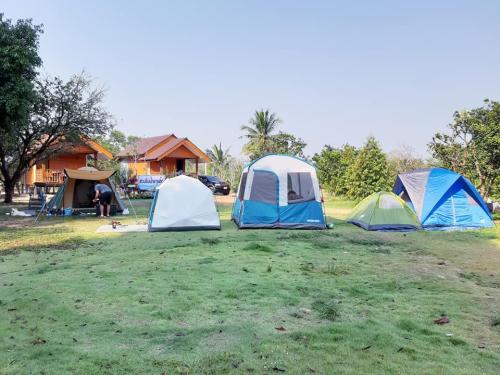
The villagers of Ban Na Ton Chan have a traditional way of life mixed farming. There is mud fermented cloth which made into a good weight fabric. It is beautiful with mud fermentation and intricate weaving. Villagers have adjusted the area for camping. Raise the bamboo litter to make a seat for eating, make a toilet, the rest is still in the same condition as before. This mountain ridge has beautiful scenery. Visitors can watch the sunrise and sunset at the same point. There are about 23 homestays in Ban Na Ton Chan, living separately or in the same house as the owner of the house. Visitors can indulge in the nature around the accommodation with a fully equipped kitchen, they can buy food, cook, and eat comfortably. There are cycling activities to see the way of life in the village. See orchards and fields with a community guide and visit the fruit orchards of the villagers are some activities. Tourism program : - Stay at Baan Na Ton Chan homestay which currently has a total of 23 houses. - Biking to see the way of life in the village, visiting fruit orchards and fields. - Watch how to make mud fermented cloth, weaving by hand, Yok Dok cloth, and buying ready-made mud fermented fabrics. - See how to make a barn doll (Ban Ta Wong) - See stump handicrafts - See and taste seasonal fruits such as durian, rambutan, longkong, mango, maprang, mafai, longan. - View point "Huai Ton Hai" to watch the sea of ​​mist and the sun - Watch and test how to cook rice and local food, and sip coffee in a bamboo tube. Route links with other attractions: - Si Satchanalai Historical Park Si Satchanalai District, 30 kilometers - Antique gold shop, antique silver shop 30 kilometers - Namtok Pa Kha National Park 70 kilometers - Sukhothai Historical Park (Old Town Sukhothai) 77 kilometers - Ramkhamhaeng National Park 110 km.
Sukhothai
1. It is a learning center for the Garden of Eden, organic agriculture, sufficiency economy. 2. Making biogas for household use 3. Making organic fertilizer and making bio-fermented water 4. Using water buffalo to plow into a traditional way of life 5. Damping and restoring forests for water sources (forest planting) 6. Making pork pits, buffalo pits, chickens, etc. 7. Growing organic vegetables and organic fruits (mixture) 8. Fisheries
Chiang Rai
Phra That Kuchan Located within the Ban Ku Chan Temple is an important sanctuary. People of Yasothon and nearby provinces pay their respects. The appearance is a square lotus-shaped chedi, shaped like Phra That Phanom, but smaller. The part of the lower base in the shape of an inverted lotus is a low facing lotus. Supporting a flat rectangular high base connected with a square lotus shape decorated with exquisite and beautiful patterns in ancient times. and the top of the relic in a square shape, which supports the tiered top From the evidence, it should be built according to the general motto of building relics, namely, to contain the Buddha's relics. Each year, a water bathing ceremony is held to preserve the good traditions. Architectural features: Phra That Ku Chan, width 5.10 meters, height 15 meters. Location is located at Ban Ngew. In the middle of the courtyard of Wat Ku Chan, Ku Chan Subdistrict, Kham Khuean Kaeo District, Yasothon Province which looks similar to Phra That Phanom. The only difference is the size that Phra That Ku Jan is smaller. Significance to the community: It is a place of worship for the people of Yasothon and nearby provinces. Every year, the people of Ku Chan sub-district will bring water, perfumes to bathe the relics in the morning of the full moon of the 6th month. In the afternoon, they go to bathe the water ceremony. Ku" after that, they will take them to Nong Sa Phang to bring water from Nong Sa Phang to perform the ceremony Pouring water on relics and bai sema which this ritual must be done annually There is a belief that if the ceremony is not performed, it will cause rain out of season; the villagers of Gu Zhan therefore practice this ritual regularly.
Yasothon
Phra That Yasothon or Phra That Anon located in front of the ubosot; it is one of the important old relics in the northeastern region. It has Rectangular chedi with a top similar to Phra That Phanom, and inside the Phra That contains the relics of Phra Anon. The construction was influenced by Laos art that was popularly built during the late Ayutthaya period to the early Rattanakosin period which corresponds to the history of setting up the city and the history of Wat Mahathat
Yasothon
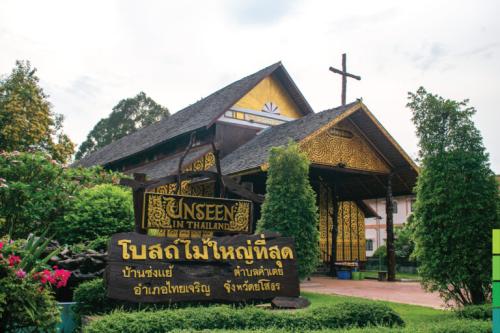
Ban Song Yae Christian Church is located in Thai Charoen district, Yasothon. There is a history in 1908 that there were 5 families who fled from different places to live in this area, they fled for the same reason, which was accused being ghouls and they were therefore attacked and drove away. It is the 4th church, planned for construction in 1936. Villagers gathered wood and built it in 1947. The shape of the church was built in Thai art style, width 16 meters, length 57 meters. It is the largest in Thailand, using 80,000 wooden planks as roofing boards, using 360 columns of different sizes, mostly wooden poles. The pillars in the middle row are the largest and longest with 260 trees, more than 10 meters high from the ground. The floor planks are of red wood and large Takhian wood. The wooden bench can hold over a thousand people. The church bell has a diameter of almost 2 feet in a tall bell tower built in the style of a bell tower in typical Thai temples. But strange that it is separate from the church and because the wood that has been gathered is a lot Therefore, the remaining wood was used to build Ban Song Yae Pittaya School.
Yasothon