คำค้นยอดฮิต: ข้าวเหนียวมะม่วง ของขวัญออแกนิค ผลไม้สด
TH | EN
฿ 0.00
Phra That Gu Chan
Sub district Ku Chan District Kham Khuean Kaeo Province Yasothon 35110
Image
Image
Image
Image
Weather
Closed
Business hours
• Sunday
: 06:00 - 18:00
• Monday
: 06:00 - 18:00
• Tuesday
: 06:00 - 18:00
• Wednesday
: 06:00 - 18:00
• Thursday
: 06:00 - 18:00
• Friday
: 06:00 - 18:00
• Saturday
: 06:00 - 18:00
Note
: -
Review Score
0
Availability
0
Value
0
Service
0
Read more >
Information
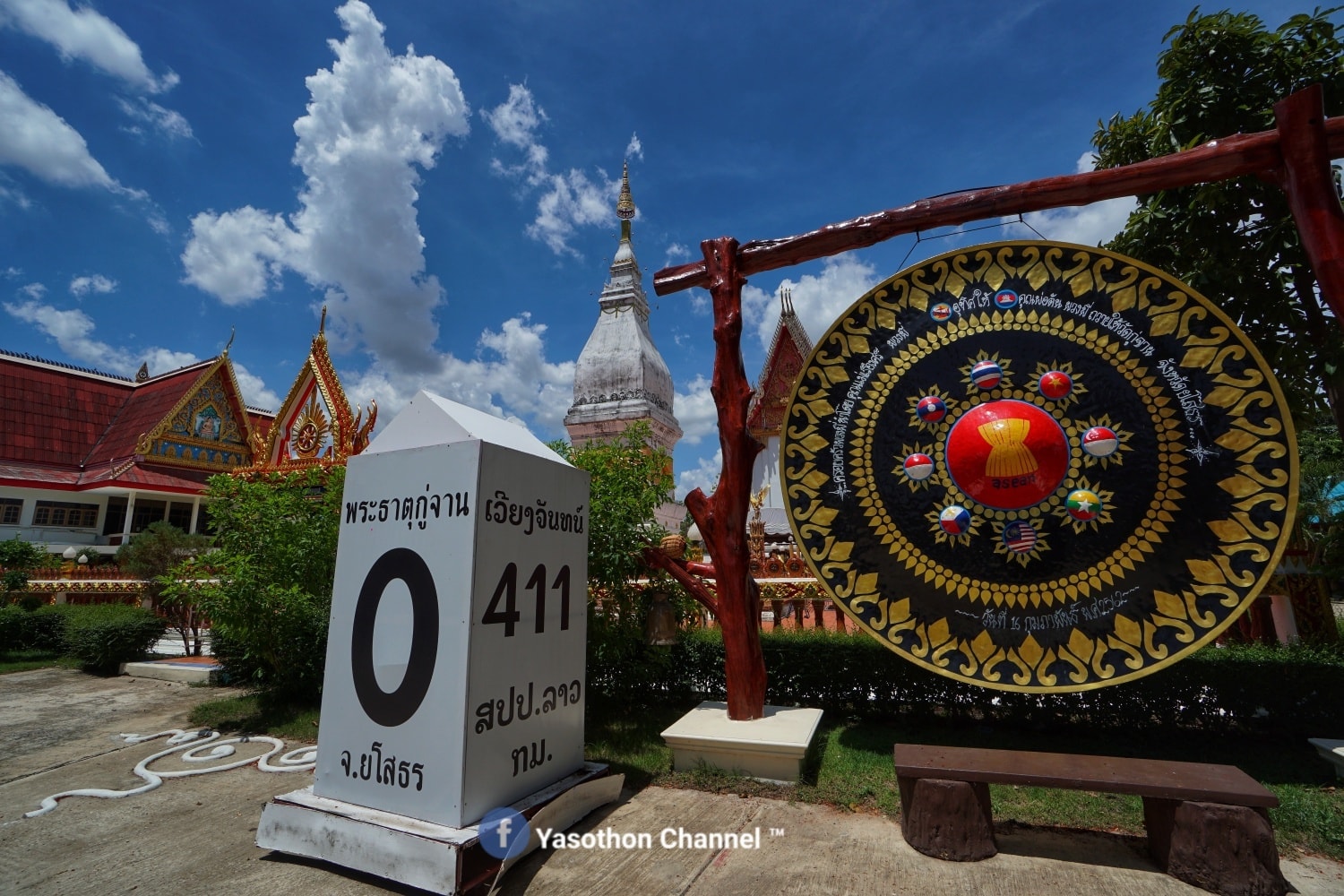
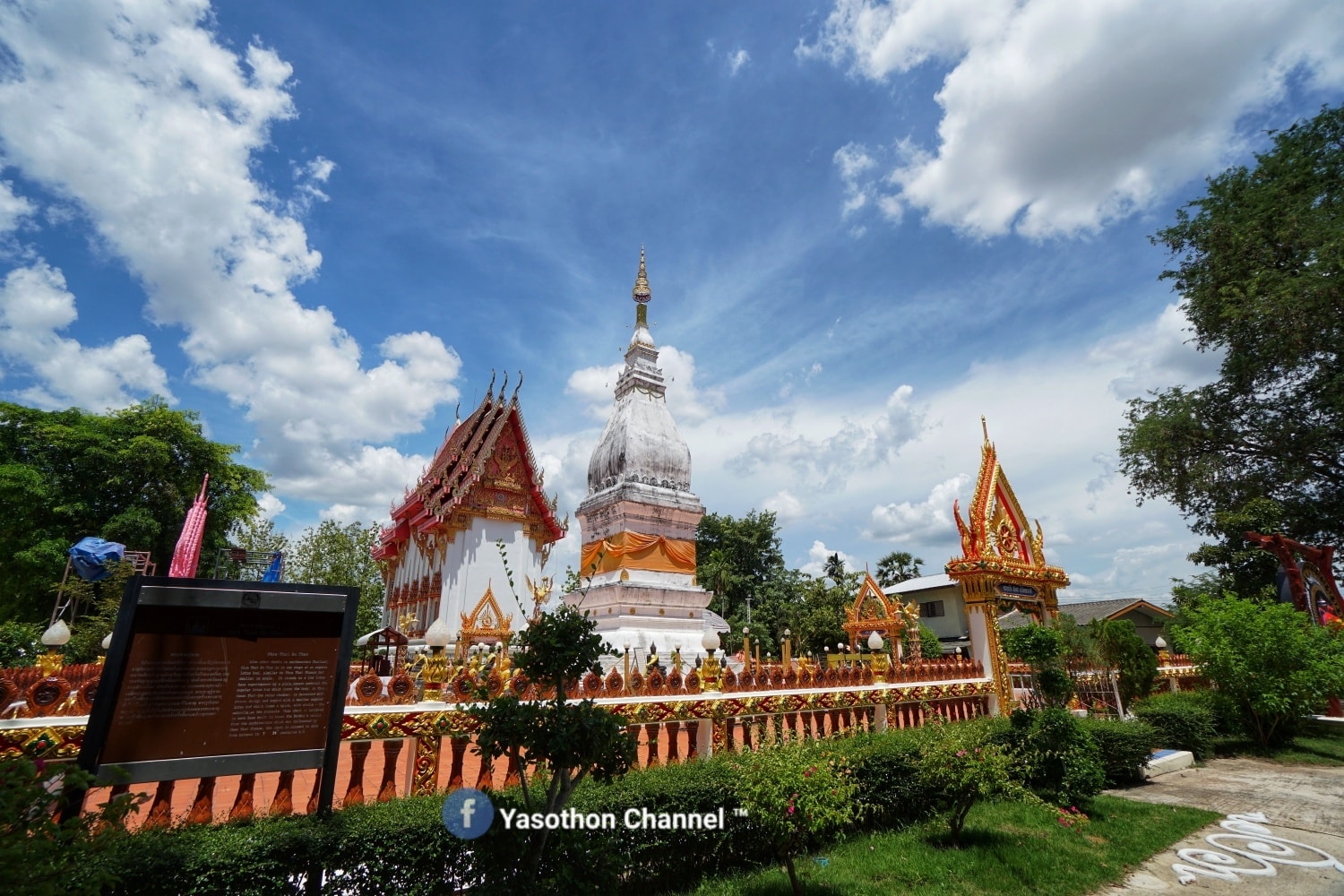
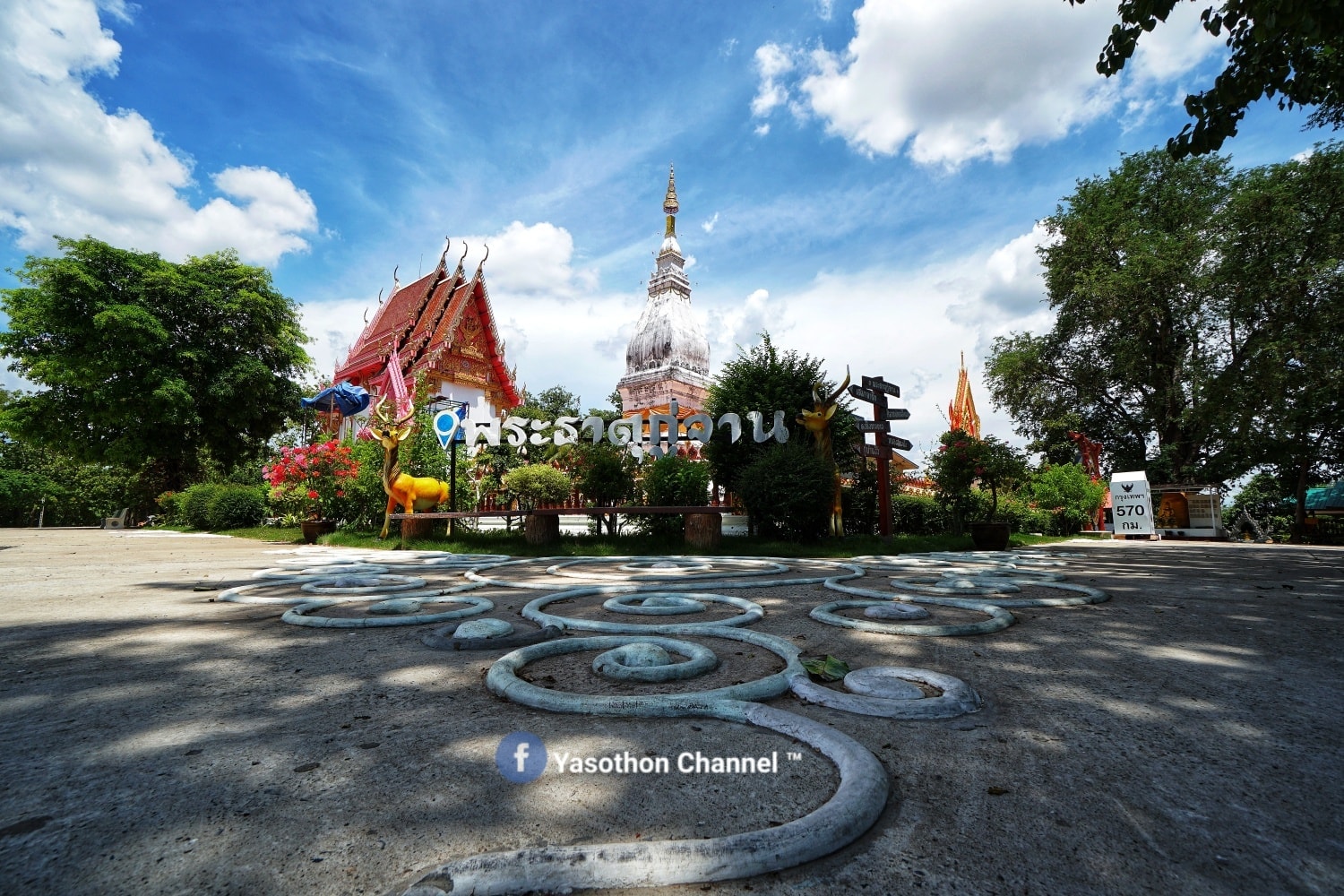
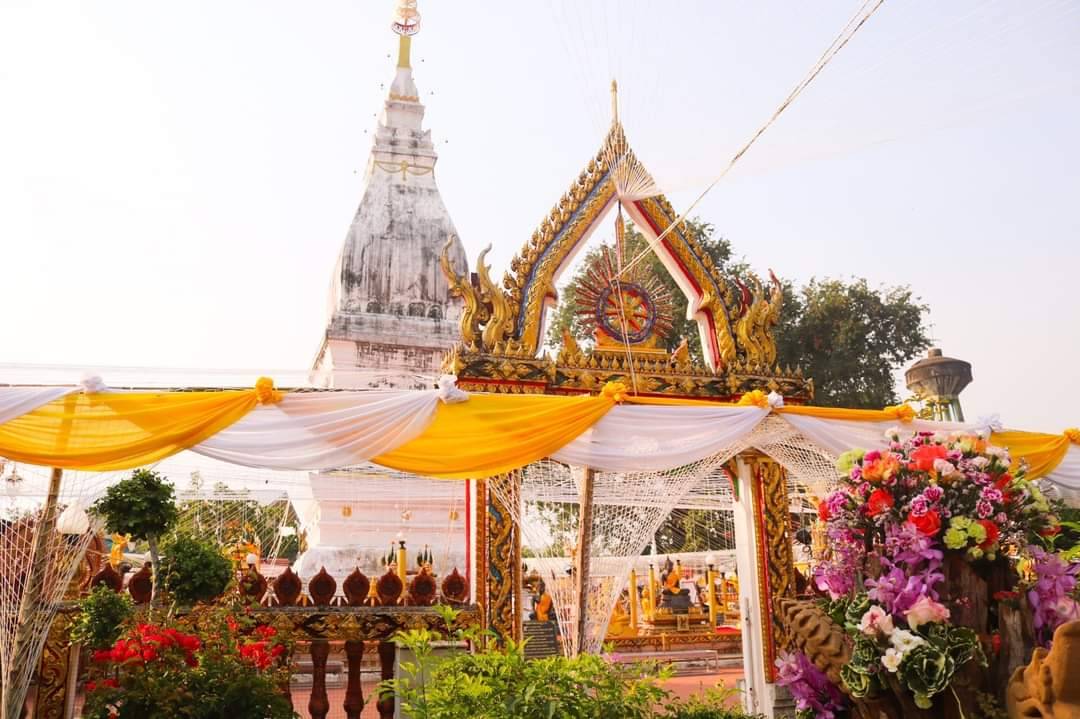
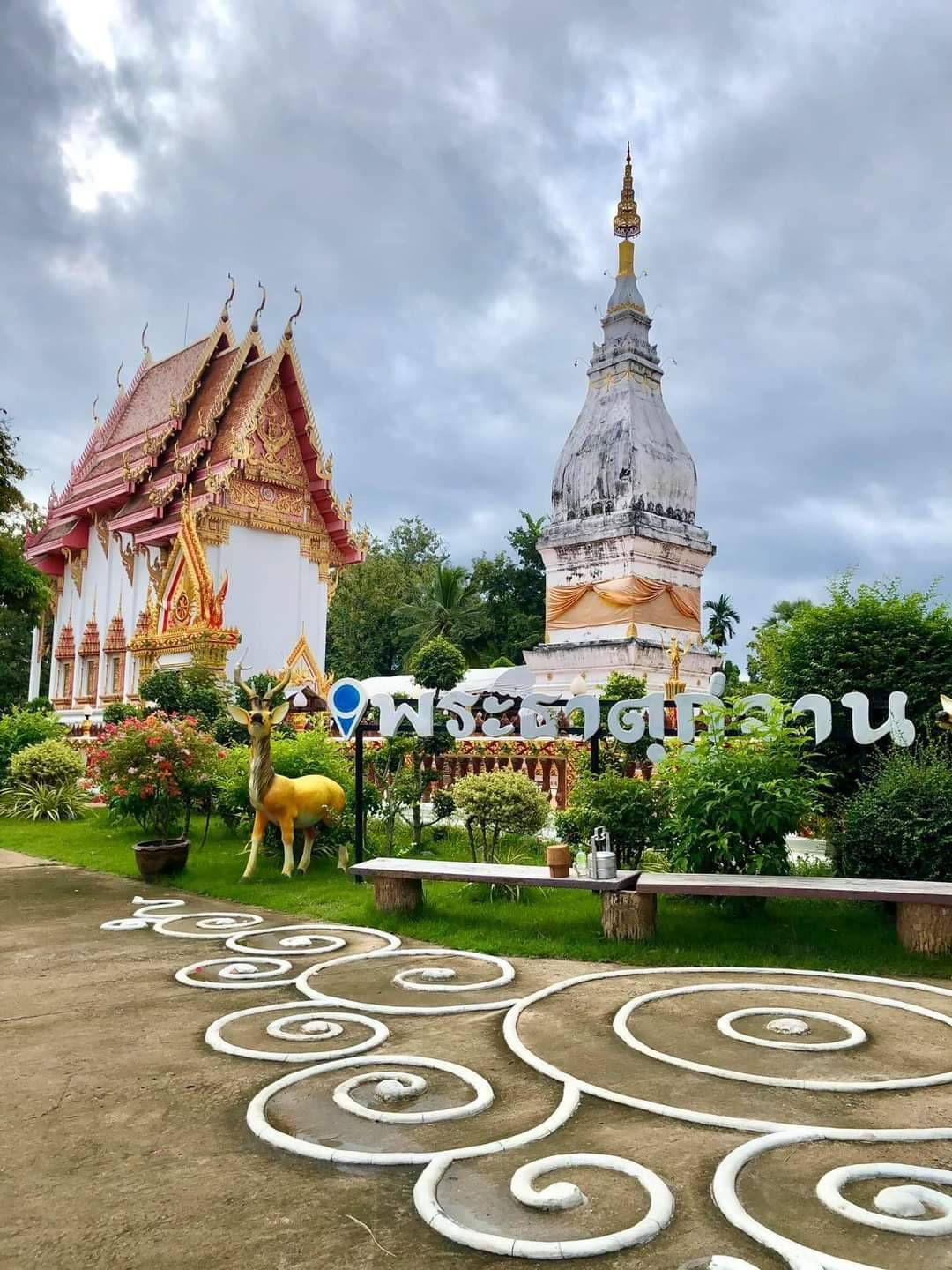
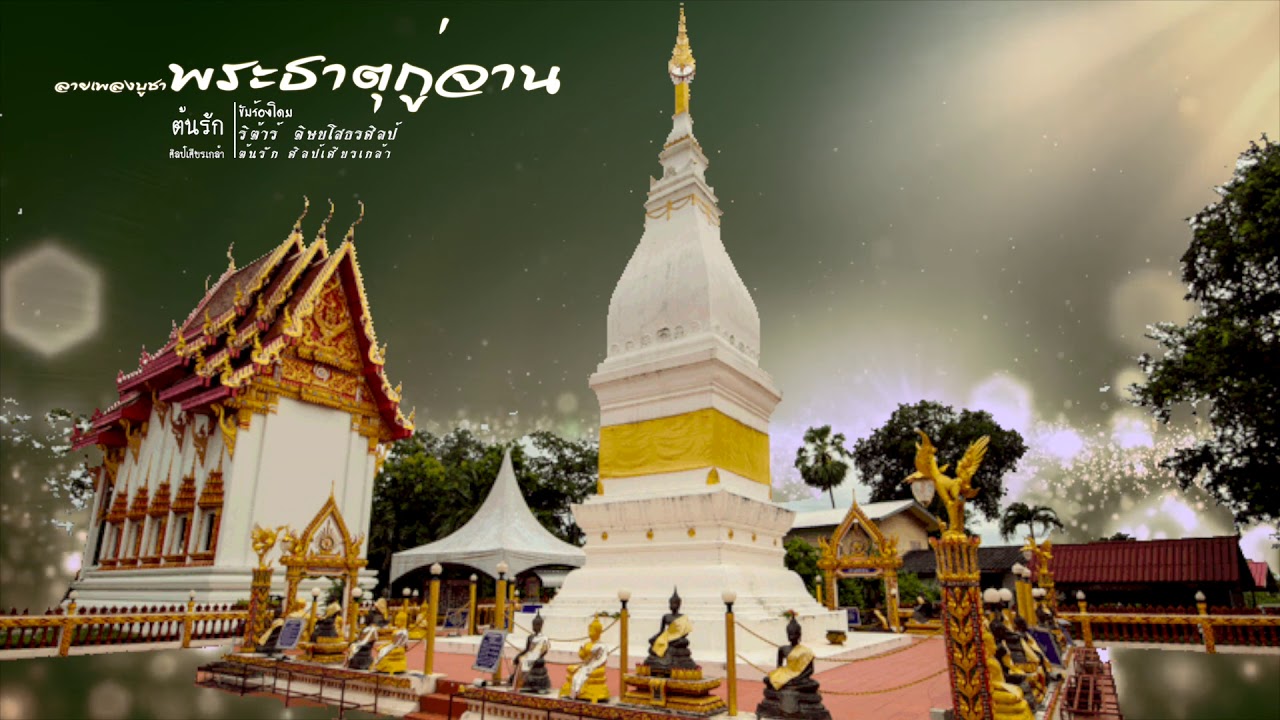
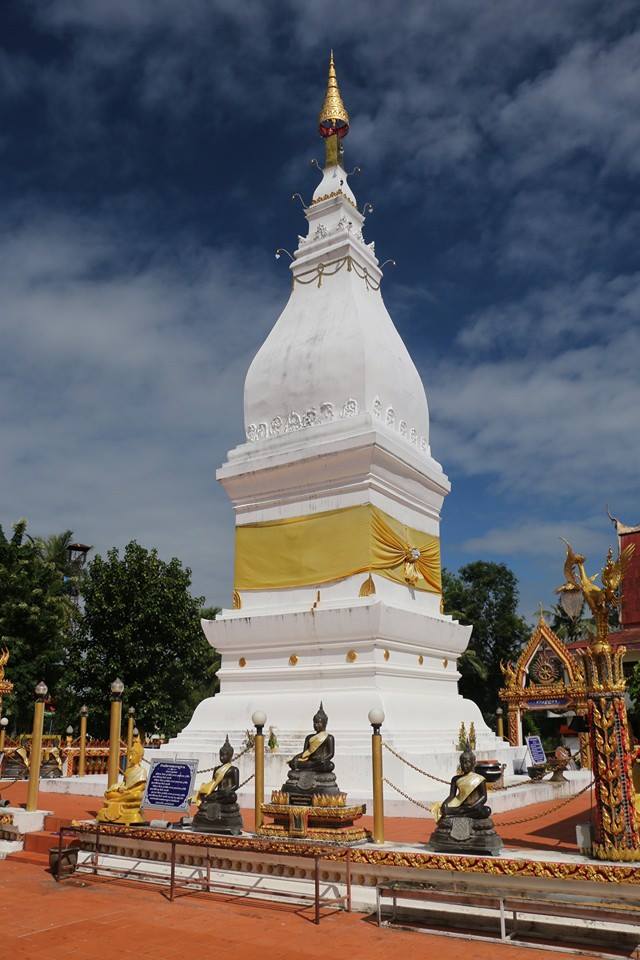
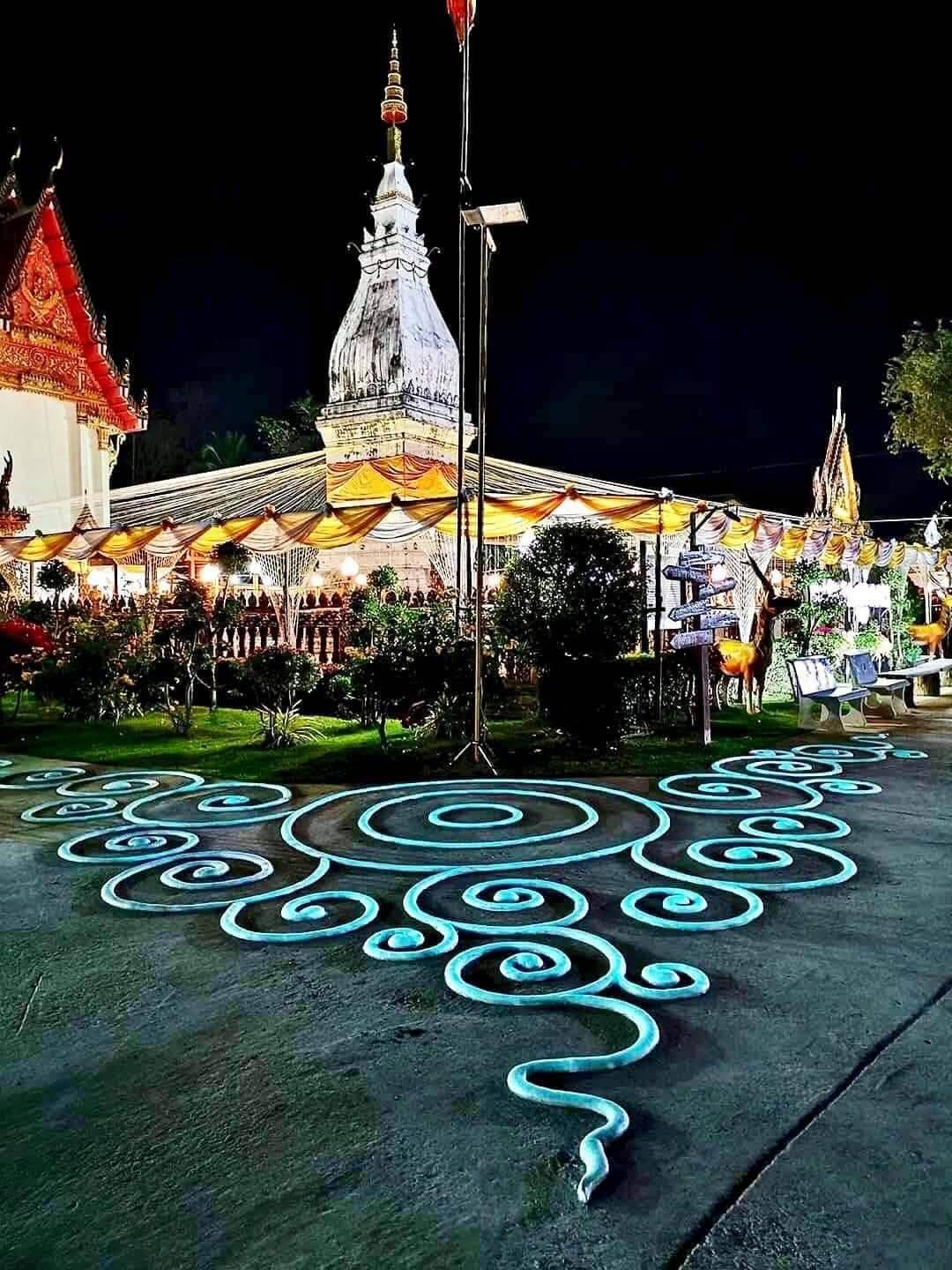
Phra That Kuchan Located within the Ban Ku Chan Temple is an important sanctuary. People of Yasothon and nearby provinces pay their respects. The appearance is a square lotus-shaped chedi, shaped like Phra That Phanom, but smaller. The part of the lower base in the shape of an inverted lotus is a low facing lotus. Supporting a flat rectangular high base connected with a square lotus shape decorated with exquisite and beautiful patterns in ancient times. and the top of the relic in a square shape, which supports the tiered top From the evidence, it should be built according to the general motto of building relics, namely, to contain the Buddha's relics. Each year, a water bathing ceremony is held to preserve the good traditions.

Architectural features: Phra That Ku Chan, width 5.10 meters, height 15 meters. Location is located at Ban Ngew. In the middle of the courtyard of Wat Ku Chan, Ku Chan Subdistrict, Kham Khuean Kaeo District, Yasothon Province which looks similar to Phra That Phanom. The only difference is the size that Phra That Ku Jan is smaller.

Significance to the community: It is a place of worship for the people of Yasothon and nearby provinces. Every year, the people of Ku Chan sub-district will bring water, perfumes to bathe the relics in the morning of the full moon of the 6th month. In the afternoon, they go to bathe the water ceremony. Ku" after that, they will take them to Nong Sa Phang to bring water from Nong Sa Phang to perform the ceremony Pouring water on relics and bai sema which this ritual must be done annually There is a belief that if the ceremony is not performed, it will cause rain out of season; the villagers of Gu Zhan therefore practice this ritual regularly.
Source
Thailand Tourism Directory
Recommended
Group of tourist
• Family
• Elders
• Working Persons
• Students / Youths / Teenagers
• Women
• Couples
• Religious Tourism
• MICE / Study Visit
• Volunteer Tourism Group
• Arts & Culture / History
• Lifestyle / Community / Agriculture
Transportation
• Bike
• Motorcycles
• Car
Entrance fees
• Entrance fees: Non-fee
• Remark : -
Facilities
Parking lot
Toilet
Tourist Assistance Center
Souvenir Shop
Slope Path
Bathroom for he Disabled
Public utilities
Water System
• Natural Water
Review (0)
0
จาก 5.0
Availability
Value
Service
Relate Agritourism
The organic agricultural tourism attractions include accommodation, activities, learning courses on agriculture and food as medicine.
Chiang Rai
Phu Tham Phra is a large cave, about 3 wa wide, about 8 wa long, located on the southern slope of the mountain. There is an entrance along the rock niche which is majestically located around a tunnel; from the mouth of the cave to the north can walk comfortably. Tham Phra Buddha Cave has 2 levels of nature as a place to be enshrined of Buddha statues, which are lined up in rows and there are 2 reclining Buddha images, Phra Kajjana Buddha images, built during the reign of Ajarn Dee Chano in this beautiful cave Phu Tham Phra is a small mountainous area. The area is about 200 rai, with mixed deciduous forests that are generally quite complete, providing shady, cool weather. It is the watershed source of many creeks. The stone pillar looks like a tourist attraction of Phu Pha Thoep. And there is a viewpoint as a beautiful natural source near the ascent, there will be a brick arch to be "Phu Ngo", the locals call Khong Gate which is located in the north of Phu Tham Phra, about 1 kilometer away. Currently, only ruins remain. The sanctity of Phu Tham Phra that has been passed down from generation to generation is that if villagers in that area go out to find forest products; they must come to this cave to worship. Then there will be luck in making a living and escape from all dangers.
Yasothon
It is organized as a learning point station in a systematic way such as 1.1. Orchid seed service station and an orchid seed room 1.2. Planting station for various orchid species and increasing the value of orchids 1.3. Ornamental plant planting and propagation station 1.4. Biological production (Trichoderma Beauveria BT), composting does not return to the pile of Mae Jo formula. 1.5. Earthworm, cricket and sloping station 1.6. Hydroponics and Sky Vegetable Planting Station 1.7. Various types of mushroom cultivation stations 1.8. Plant seedling cultivation station and food processing from mushrooms 1.9. Different types of fruit plant propagation stations 1.10. Integrated Agricultural Station according to the Sufficiency Economy Philosophy (can be adjusted as appropriate)
Samut Sakhon
Little House in the Big Wood is a learning center of sufficiency economy philosophy. It was established by the new generation of agriculturists who would like to inherit sufficient agriculture. By applying a house and garden as the learning center for visitors.
Chumphon
Chanthaburi Agricultural Extension and Development Center (Chantaburi Bee Center) is an agricultural tourist attraction for economic insect farming; breeding of bee species, burrowing bees, stingless bees, crickets and processing of bee products and stingless bees, learning point of sufficiency economy, cultivation of fairy mushrooms and mushrooms in logs, growing vegetables safe from toxins in containers, Condensed Lemon Cuttings. You can travel every day at Chanthaburi. Beekeeping
Chanthaburi
There are no charges for visiting Bhumirak Dhamachart Centerm except if you come in groups and need to participate in the activities that the Center has arranged. Here is an excellent learning source, which provides you understanding of the meaning of the word “sufficient” and how to use resources to gain the most benefits and appreciate its value. The walk around this place is in a circle, starting from the Northern Zone to be excited with the planting of various types of bamboo in both ways as well as the prettiness of the bamboo bridge, the bamboo house near the lotus pond, and the bamboo toys. It is exhibited in this way so that we will know about the many benefits of bamboo, including the making of the water dripping trough for watering the trees and soil to replace people; walking up the small mountains to learn about the wild mountain; hydraulic ram pump is to use water to compress the water to the highland instead of using the water pump, wet fire break system, benefits of vetiver grass, and how to build the check dam. Then, walking though the Central Zone to learn about New Theory Agriculture for the farmers to gain benefits from their own land to its value; learning how to build the soiled house and many types of herbs. After that, walking though the Northeastern Zone to visit the rice bank; learning about the rice milling and how to raise the livestock, in which huge cows can be seen in the stalls; how to make compost for own use so that there is no need to buy chemical fertilizer, and learn about Hom Din, which is how to bring back to good soil for farming by covering the land. But how to do that? It is better to learning by yourself. Lastly, going into the Southern Zone to look at how to burn charcoal from bamboo; how to make Biodiesel, and learn about Kaem Ling Project. Moreover, throughout the Center, I have seen many big and small watercourses along the way. There are pools, agricultural beds to grow crops, Chai Phatthana Hydraulic Turbine, the growing of vetiver in water, and many other things. This is the end of the walk where we have received knowledge and enjoy an untiring walk. Walking around, looking, listening, and asking the officer relentlessly just because things that we think ‘we know’ become things we never knew before. This is because we are used to all these projects or theories but we have never practiced or actually touched. How to travel: From Rangsit intersection, take the direction of Ong Kharak District. Head to use the route of Nakhon Nayok-Nang Rong Waterfall. Pass through Wang Takrai. Before reaching Nang Rong Waterfall for about 2 kilometers, turn right into Khun Dan Prakan Chon Dam Project. Go straight for about 3 kilometers until reaching the traffic circle (with the elephant statues). Go to the right to cross the bridge. When reaching the four-way intersection, turn right and go straight for 200 meters. The Center is on the left-hand side.
Nakhon Nayok
Baan Suan Akira was established as a learning center. This project is due to the royal Initiative of His Majesty King Bhumibol Adulyadej Maha Bhumibol Adulyadej the Great with the philosophy of sufficiency economy. Local people can apply the concepts and practices in their living. The learning resources are as follows; 1. Learning Center due to the royal Initiative project, Pai District, Mae Hong Son 2. New Theory Agriculture Learning Center, Pai District, Mae Hong Son 3. Sufficiency Economy Learning Center, Pai District, Mae Hong Son 4. Learning Center for Enhancement of Agricultural Product Production in farming, mixed farming, livestock, and fishery 5. Prototype plot for organic plant production of Mae Hong Son 6. Agro-tourism according to The OTOP Nawat Withi Tourism Community Project 7. Land Development Technology Transfer Center of Mae Hi Sub-district 8. Khok Nong Na Learning Center Model, Baan Suan Akira
Mae Hong Son
Enjoyable with the fullest tour of fruits buffet tasting such as durian, rambutan, mangosteen, longkong, on an area of ​​41,600 square meters. Watch a demonstration of durian harvesting and selling processed fruits.
Rayong
Panan garden has many types of fruit planted there, including rambutan, mangosteen, longkong, durian. The cost of visiting Panan garden during May - June, when the orchard is full of fruit is 200 baht per person (price subject to change). In addition, there is also accommodation in the orchard.
Rayong
Agricultural Occupational Promotion and Development Center, Chanthaburi Province: It is an agency of the Department of Agriculture Extension. It has duties to educate and practice agricultural careers for farmers and people who are interested. It is an agricultural tourist attraction and a study site for farming and economic insects, processing of bee products and stalks and agriculture in line with sufficiency economy. There are various learning spot within the center as follows: • Learning point for breed beekeeping • Learning point for honey beekeeping • Learning point for Steep beekeeping • Learning point for raising crickets • Learning Point for Bee Product Processing and honey bees • Learning point for agriculture based on the sufficiency economy (planting vegetables in containers Oyster Mushroom cultivation) Tour Program All year Route links with other attractions (with distance/km) • Chanthaburi Agricultural Research and Development Center (Thung Ple), 21 km. • Royal Initiative Fruit Tree Development Center, Chanthaburi, 24 km. • Office of Agricultural Research and Development, District 6, Chanthaburi, 25 km. • Khung Kraben Bay Development Study Center, 48 km. • Baan Pattawee Community Learning Center, 5 km. Community Enterprise Products: • Bee Honey • Stingless Honey • Processed products from bees and stingless bees (honey soap, herbal honey shampoo, herbal bee wax, Beeswax Lip Balm, Propolis Lotion Honey Cream)
Chanthaburi
The perfect combination between a Historic River and Agro-Tourism, ""Cruising along the Maha Sawat canal and the beautiful orchard sceneries."" Changing the natural capital to be a perfect agricultural tourism. The agro tourism ""Cruising along the Maha Sawat canal and the beautiful sceneries"" was initiated from the concept of bringing the way of life of farmers who are doing routine of working together with the existing ""natural capital"", the resources of agriculture, gardening, farming, plowing, which parents, grandparents, and grandparents carry on until this generation. To adapt with what is available in the area, Khlong Khut Maha Sawat, historic canal that King Mongkut (Rama IV) graciously digs for a route for His Majesty to worship Phra Pathom Chedi. It took 5 years to complete the excavation, from 1855 to 1860. Khlong Khut Maha Sawat is 27 kilometers long from Bangkok to Tha Chin River and has many stories about the canal, such as the King's request to build 7 pavilions along the canal, for example the City Hall (Sala Klang Subdistrict Nonthaburi Province), Sala Thammasop (Taweewattana District, Bangkok), Salaya and Sala Din, which are in Phutthamonthon District. In addition, there are people using the last name beginning and ending with the word ""Sawat"" about 68 surnames such as Sawat Daeng, Sawatjun, Sawatsoradet, Sawatnam, Sawatdee Me, Desawad, etc. tourism program One Day Trip Point 1 going to the pier at Suwannaram Temple with welcome farmers to lead tourists to various spots Point 2 Watching the Gac Processing and the story before it came to be Yentafo Fak Rice and healthy gac juice Point 3 Visiting Na Bua Luang Cut Dok to learn how to make lotus Rowing a boat to collect lotus in the middle of the swamp Learn to fold lotus petals. Point 4 Visiting the miracle of Thai rice. Point 5 Orchid Garden Visit an orchid garden and cultivate various orchid species. Point 6 Visiting the fruit orchards, mixed farming fields, and tasting seasonal fruits. Taking an E-Tak car ride to see the garden and plots of rice fields Route links with other attractions (with distance/km) Jesada Technik Museum Nakhon Chai Si District, 21 kilometers distance - Thana Market, Nakhon Chai Si District, 25 kilometers distance - Don Wai Floating Market, Sampran District, 10 kilometers distance - Wat Rai Khing, Sampran District, 15 kilometers distance - Lam Phaya Floating Market, Bang Len District, 26 kilometers distance - Phutthamonthon Sathan, Phutthamonthon District, 6 kilometers distance - Phra Pathom Chedi Mueang Nakhon Pathom District, 36 kilometers distance Community enterprise products in the community assorted rice bowls - Crispy Golden Banana - Miang Kham Bua Luang - Seasonal products such as grapefruit, mango, jackfruit, banana - Ornamental plants, lotuses and orchids
Nakhon Pathom
"Suan Lamai" is a large orchard on an area of ​​over 800,000 square meters with a tram service for tourists to explore the orchard and enjoy various kinds of fruit in a buffet such as a Rambutan, Mangosteen, Longan, Grapefruit during fruit season. During the Winter, "Suan Lamai" will opens for visitors to visit a Strawberry farm and colorful Cosmos flowers garden. There's also a sheep farm for animals lover who wants to feed a sheep and take photos with those sheep.
Rayong