คำค้นยอดฮิต: ข้าวเหนียวมะม่วง ของขวัญออแกนิค ผลไม้สด
TH | EN
฿ 0.00
Ban Tham Phung Ecotourism Group
Sub district Ton Yuan District Phanom Province Surat Thani
Image
Image
Image
Image
Weather
Closed
Business hours
• Sunday
: 09:00 - 16:00
• Monday
: 09:00 - 16:00
• Tuesday
: 09:00 - 16:00
• Wednesday
: 09:00 - 16:00
• Thursday
: 09:00 - 16:00
• Friday
: 09:00 - 16:00
• Saturday
: 09:00 - 16:00
Note
: -
Review Score
0
Availability
0
Value
0
Service
0
Read more >
Information
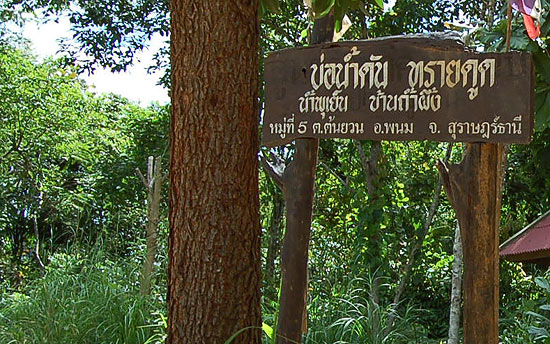
Nam Dun Thray Dud Miracle pond
Nam Pud upstream forest
Black flowers
Nam Lod Cave
Battlefield historical Cave
Tarn Prueksa Waterfall or Bang Khuy Waterfall
Source
Thailand Tourism Directory
Recommended
Entrance fees
• Entrance fees: Non-fee
• Remark : -
Review (0)
0
จาก 5.0
Availability
Value
Service
Relate Agritourism
The organic agricultural tourism attractions include accommodation, activities, learning courses on agriculture and food as medicine.
Chiang Rai
Suphanburi Banana Conservation Center: It is a sufficiency agricultural community enterprise, responsible for the conservation of rare banana species in Thailand; and it has collected up to 108 banana species, especially the species of Suphan Buri itself.
Suphan Buri
Learning center for organic farming Conservation of Thai horses, hippo therapy (for autistic children), visit the garden, eat fresh fruit from the organic farming orchards
Chanthaburi
1. Form of activity: see and study the production process of jasmine rice, volcanic soil, weave mat demonstrate, fabric dyeing from soil at Ba Rai holy well. Sightseeing plant herb production area and herbal processing, buy some souvenir or product and agricultural goods, OTOP center. You can try yummy food in KhanToke style and see Apsara Dance, see view by bicycle, take a rest at homestay, visit rural market in the morning. 2. The way of community: cultivation, southern east livelihood, traces of Khmer civilization. 3. The Participation of tourist: tour, taste, shopping, snap, share, do and learn agricultural station. Tourism Program 2 days 1 night Frst day, Check in at the accommodation, rent some bicycle, see how to produce volcanic jasmine rice station, see how to plant vegetable and herbal processing, having lunch at Baray reservoir. Afterwards, visiting at Mueang Tum Ruin, see around the community by bicycle in the evening then make some traditional dinner at homestay (KhanToke style and see Apsara dance but it is depend on coustomer's demand because it is an extra charge), lie down at homestay. Day 2 Visit morning rural market, give food to the monks, have a meal at homestay, weave mat demonstrate and fabric dyeing from soil at Ba Rai holy well, weave fabric as Paco Fern pattern (Pak Krood) and buy some silk fabric with Pak Krood pattern at The OTOP center, go up the hill to visit Khao Phanom Rung National Park The route that linking with the others tourist attraction 1. Mueang Tum Ruin distance 500 meters. 2. PhanomRung Historical Park distance 5 kilometers. 3. Phu Akkanee Dye Fabric group distance 23 kilometers. 4. Wat Khao Ang-Karn Chaloem Phra Kiat district distance 25 kilometers
Buri Ram
Phra That Kuchan Located within the Ban Ku Chan Temple is an important sanctuary. People of Yasothon and nearby provinces pay their respects. The appearance is a square lotus-shaped chedi, shaped like Phra That Phanom, but smaller. The part of the lower base in the shape of an inverted lotus is a low facing lotus. Supporting a flat rectangular high base connected with a square lotus shape decorated with exquisite and beautiful patterns in ancient times. and the top of the relic in a square shape, which supports the tiered top From the evidence, it should be built according to the general motto of building relics, namely, to contain the Buddha's relics. Each year, a water bathing ceremony is held to preserve the good traditions. Architectural features: Phra That Ku Chan, width 5.10 meters, height 15 meters. Location is located at Ban Ngew. In the middle of the courtyard of Wat Ku Chan, Ku Chan Subdistrict, Kham Khuean Kaeo District, Yasothon Province which looks similar to Phra That Phanom. The only difference is the size that Phra That Ku Jan is smaller. Significance to the community: It is a place of worship for the people of Yasothon and nearby provinces. Every year, the people of Ku Chan sub-district will bring water, perfumes to bathe the relics in the morning of the full moon of the 6th month. In the afternoon, they go to bathe the water ceremony. Ku" after that, they will take them to Nong Sa Phang to bring water from Nong Sa Phang to perform the ceremony Pouring water on relics and bai sema which this ritual must be done annually There is a belief that if the ceremony is not performed, it will cause rain out of season; the villagers of Gu Zhan therefore practice this ritual regularly.
Yasothon
Indulge with a seasonal fruits buffet such as durian, rambutan, mangosteen, along with local food services.
Rayong
Suan Sawan Suphan Buri on the area of hundreds of acres: It consists of many types of plants that are displayed for viewing each period and various festivals throughout the year, including Thai flowers and oversea flowers that are colorful, beautiful and spectacular. Both foliage and fruit trees that have been researched and propagated until obtaining suitable varieties with the best quality for distribution to farmers for further cultivation
Suphan Buri
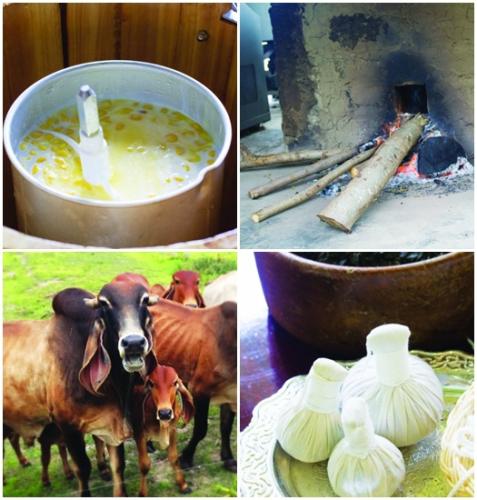
Rai Khun Mon is a mixed agricultural plantation, organic vegetable garden and a factory to process various products such as corn milk, vegetable juice, banana/jackfruit dried. Krayasart coated with vegetable juice, corn Meatballs, corn milk ice cream, healthy homeopathic food and a learning center for Thai wisdom on an area of ​​150 rai with modern machinery Tourism program Learn activities based on various bases. 1. Corn milk production base 2. Corn milk ice cream production base 3. The base for collecting fresh corn from the field 4. Sesame oil extraction base 5. Wood vinegar extraction base and Iwate charcoal furnace 6. The base for making a compress 7. Earth house Other attractions along the route (with distance/km) River Kwai Bridg, Kanchanaburi War Cemetery, a distance of 25 kilometers Wat Tham Suea (Tiger Cave Temple), a distance of 30 kilometers Giant Raintree, a distance of 30 kilometers Community enterprise products Corn milk, sesame oil Vacuum baked bananas
Kanchanaburi
Phu Mak Prik is a community forest, in Kut Chum Subdistrict, Kut Chum District, Yasothon Province, in the past, it was an area on Phu Suan Nueng which used to be a source of chili gardening until it has deteriorated. Subsequently, the forest was restored and replanted to become greener again after serious care from the Phu Mak Prik Sect. which developed into a temple of Phu Mak Prik later. And currently, the temple is in the process of building a new half-timbered and half-cemented ubosot amidst the shady nature of trees. It is expected that when finished it will be very beautiful. On Wat Phu Mak Phrik, there is peace and tranquility. It is a shady place to practice meditation. There is also a small viewpoint which those who go up to visit the temple can visit as well. The entrance to the viewpoint might be a bit difficult to see, but you can ask for directions from the monks in the temple
Yasothon
King Bhumibol Adulyadej (King Rama IX) foresaw the significance of plant genetic conservation prior to a recognition of the terms “Biological Diversity” and “Conservation” in Thailand. During the trip to Klai Kang Won Palace, A. Hua Hin, Prachuap Khiri Khan Province in 1960, he passed through A. Tha Yang, Phetchaburi Province and noticed many Yang Na trees (Dipterocarpus alatus). Therefore, he had royal words to collect the seeds to plant at Phra Tamnak Piam Suk, Klai Kang Won Palace, and grow the seedlings at Royal Chitralada Projects to study. In 1985, King Rama IX gave a royal word to conserve jackfruit tress around the Grand Palace and initiated the plant conservation project in the palaces by tissue culture. Later in 1986, he had the royal idea to conserve and breed rattan palms and arrange the herbal garden in Royal Chitralada Projects area. Her Royal Highness Princess Maha Chari Sirindhorn carried on the plant conservation project by having the royal idea and asked Lord Chamberlain to carry out plant conservation project in June 1992, when the seed gene bank was formed, and study the preservation of non-industrial crops under the royal thought framework. In 1993, Mr. Sujin Phunikom, the Assistant Subdistrict Headman of Salui and Tha Sae District, Chumporn Province, and his group, cooperated with the Director of Ultra Products Co., Ltd. and the agriculturists in Chumporn Province to establish plant conservation project at the public area located at Moo.6, Salui District (presently Moo. 5 and 6, Salui District, and Moo.4 and 7, Song Phi Nong District). At the same time, the Royal Chitralada Projects was looking for the area to set up the Plant Genetic Conservation Project Under The Royal Initiative of Her Royal Highness Princess Maha Chari Sirindhorn. Subsequently, Royal Chitralada Projects represented by Professor Prachid Wamanont (the Consultant) and the team met with Chumporn Governor (Mr. Prayoon Promphan) to discuss about the project. The first five years, the project was named “Plant Conservation and Development Project Under The Royal Initiative of Her Royal Highness Princess Maha Chari Sirindhorn, Chumporn Province”. Chumporn Provincial Agricultural Extension proposed the project for the approval from Chumporn Governor and submit the project documents to the Director of Royal Chitralada Projects to respectfully inform to Her Royal Highness Princess Maha Chari Sirindhorn on 26 April 1993. Moreover, Plant Conservation and Development Project was integrated with the royal plant genetic conservation project, which Dr. Pisit Wora-urai was a Chairman. The executives meeting on 9 July 1997 had the resolution to change the project’s name from “Plant Conservation and Development Project Under The Royal Initiative of Her Royal Highness Princess Maha Chari Sirindhorn, Chumporn Province” to “Plant Genetic Conservation Project Under The Royal Initiative of Her Royal Highness Princess Maha Chari Sirindhorn”
Chumphon
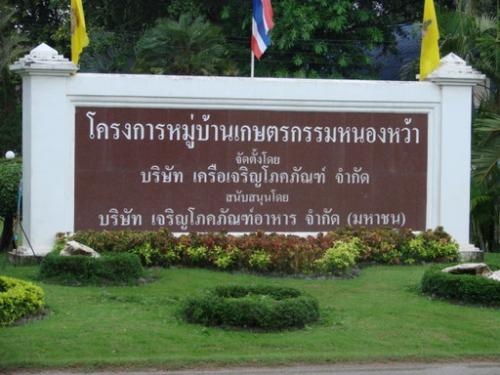
From over 1.6 square kilometer of useless wasteland to a strong farmer community today, “Nong Wa Agricultural Village”, Phanom Sarakham District, Chachoengsao Province uses the “3 Benefit 4 Collaboration” model to enable farmers to access land and funding sources. They revived the dry land to become a green agricultural area, and farmers have a stable career.
Chachoengsao