คำค้นยอดฮิต: ข้าวเหนียวมะม่วง ของขวัญออแกนิค ผลไม้สด
TH | EN
฿ 0.00
Agricultural Technology Promotion Center on Economic Insects
Sub district Nong Khwai District Hang Dong Province Chiang Mai 50230
Image
Image
Image
Weather
Open
Business hours
• Sunday
: 09:00 - 16:00
• Monday
: 09:00 - 16:00
• Tuesday
: 09:00 - 16:00
• Wednesday
: 09:00 - 16:00
• Thursday
: 09:00 - 16:00
• Friday
: 09:00 - 16:00
• Saturday
: 09:00 - 16:00
Note
: -
Review Score
0
Availability
0
Value
0
Service
0
Read more >
Information
Agricultural Technology Promotion Center for Economic Insects Chiang Mai Province Established in 1980 It is an agency under the Department of Agricultural Extension. Ministry of Agriculture and Cooperatives It plays a major role in research studies. Test and apply economic insect farming technology Promote and transfer economic insect culture technology as a center for development, production, expansion and distribution of economic insect species, as well as providing basic product quality inspection services and diagnosis of diseases and pests of economic insects to farmers and interested parties. It is also a tourist attraction. Agribusiness that is open to both Thai and foreign tourists to get to know and learn about the life of bees and important economic insects of Thailand. Each year, both Thai and foreign tourists visit to study work and travel to the learning points that the center has exhibited, such as learning points on beekeeping, bee breeding, burrow bee, cricket, lac, queen bee, and product processing. and also provide “Honey Shop” product display and distribution point where tourists can watch, taste and buy real, good quality honey and other processed products. of community enterprises and entrepreneurs

Tourism program :
Learning point/base interesting activities
1. Breeding bees. Open house for breeding bees. (Acquaintance with bees, life cycle and well-being of bees in the hive) Keeping and maintaining bee health checks collecting nectar from flowers
and sap. Preliminary analysis of honey quality.
2.Honey bees Wild bees make money. (Get to know the burrowing bees and natural nest building. Traditional poaching beekeeping techniques Modern honey beekeeping Protecting against the pests of honey bees Techniques for collecting good quality honey
3. Chan Rong Open House Chan Rong (Get to know the amazing mini bee, the best pollinator). propagation Nectar, pollen and resin collection behavior of saplings Making resin extracts and their uses
4. Crickets
Crickets are the world's reserve protein food source. Commercial cricket species Standard farming techniques and management Processing crickets as food
Learning point/base interesting activities
5. Shellac: Get to know lac insects/life cycle and benefits. Transplanting plants for lac culture farming techniques Care and harvest Technology for protection and nursery of lac species during the dry season
6. The queen bee opens the experience of finding the queen bee queen in the hive. birth of queen bee The Great Duties of the Queen Bee Techniques for cultivating queen bees
7. Processed products
Watch/Taste/Touch A variety of bee products, natural gifts. The benefits of bee products
Tips for buying honey Processing bee products into products for daily use

Route links with other attractions:
- Chiang Mai Night Safari Night Zoo, distance 750 m.
- Royal Park Ratchaphruek, a distance of 1 km.
- Wat Inthrawat (Wat Ton Kwen), a distance of 2.5 km.
- Wat Phra That Doi Kham, a distance of 4.4 km.
- Baan Tawai Handicraft Center, a distance of 10 km.
- Wiang Kum Kam, a distance of 11 km.
Source
Thailand Tourism Directory
Recommended
Entrance fees
• Entrance fees: Non-fee
• Remark : -
Review (0)
0
จาก 5.0
Availability
Value
Service
Relate Agritourism
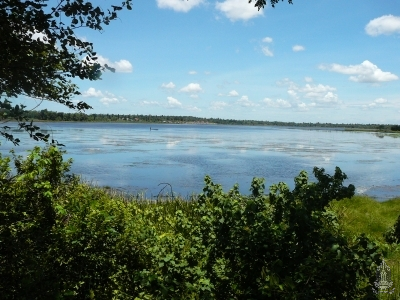
Kud Kaloeb is a large natural water source with clear water to see the fish; it is located in Tambon Nong Ped and Tambon Nong Hin. Originally, it was just a water source that people used for farming and only catch fish for a living. But, now, Yasothon has developed it into a tourist attraction and recreation venue by adjusting the landscape to be beautiful. It is where the Songkran Festival of the province is held every year. There are people who always come to visit and relax on holidays. The convenient travelling to Kud Kaloeb is, starting from Yasothon - Amnat Charoen Road at km 14 (Ban Khamkerd, notice that there will be watermelons for sale along the road), turn left into Ban Nong Ngong, go to Ban Nong Bok - Ban Non Sawat, you will reach Kut Kalieb. The distance is about 10 kilometers.
Yasothon
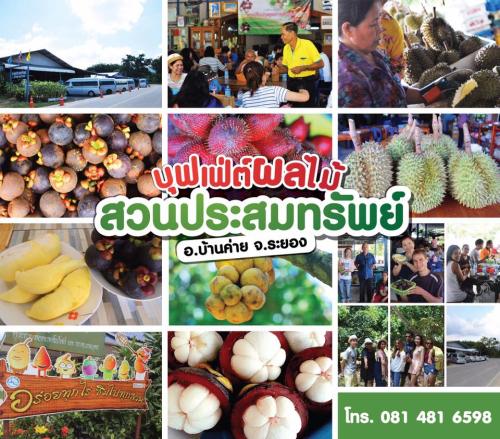
There is various fruit trees plant on this farm such as Mangosteen, Longkong, durian, Rambutan, Santol, and Mayongchid. It is like a normal orchard but the difference is that "Suan Prasomsap" uses natural extracts. and use bio-fertilizer in pest control to grow fruit trees ensuring that quality products will be safe from toxins and chemicals. That's fruits from this orchard have a sweeter and tastier flavor.
Rayong
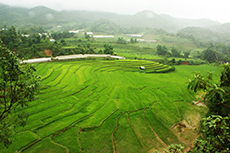
It is an agritourism attraction that is still natural and pure. It is also warm with the beautiful way of life of the hill tribes. During September to October is the rice farming season which is suitable period to visit.
Mae Hong Son
Ban Rai Chaisuri is at Si Bun Rueang Subdistrict, Mueang, Mukdahan. It is a learning center for a career according to the sufficiency economy. This place is available for the general public and tourists to learn about various agriculture to apply for a career.
Mukdahan
Suphanburi Banana Conservation Center: It is a sufficiency agricultural community enterprise, responsible for the conservation of rare banana species in Thailand; and it has collected up to 108 banana species, especially the species of Suphan Buri itself.
Suphan Buri
Khao Yai Farm Village is an agricultural tourist attraction. There are sheep and rabbit farms, a learning center, and a comprehensive tourism tour. There are also more than 20 activities such as mushroom picking, egg picking, terrarium gardening, clay oven pizza making, herbal candles making, clay pottery making, soap making, etc. It opens every day, and entrance fee is 100 baht. Green Me Organic Farm: The uniqueness lies in the way of organic farming. There are rice cultivation, animal husbandry, vegetable cultivation, mushroom cultivation and quality product processing. And there are accommodations for tourists who want to learn organic farming methods. Visitors should contact in advance. Pakchong Vegetable Garden is outstanding for the sufficiency farming method. It is divided into learning bases for visitors to study and visit and Mr. Noom Sek, the owner of the garden who was selected as an outstanding farmer They can also transfer knowledge and experience in agricultural management as well. Guno Garden is a source of high quality original organic salads. There are vegetable planting demonstrations and vegetable planting activities for children as a group and also teaches how to make vegetable salads, salad rolls as well Khao Yai Floating Market: there are more than 200 kinds of plants and flowers to see and study. And there is also a hand-roasted coffee activity for tourists to participate in the activity. Open every day, entrance fee is 100 baht. There are many vineyards among Pak Chong agro-tourism community enterprises such as Suan Kwan Si, Suan Chaiyapruek, Khun Wan Vineyard, Suan Phomchon, Alsidini Wine Vineyard, etc. Pak Chong Durian Orchard: a kind that must be reserved in advance only with the distinctive taste of Pak Chong fruit makes tourists must travel to taste the garden Zeta Durian Orchard, Rai Wong Kaset 2 orchards in our group that produce quality Pak Chong durians. Ken Pha Phong Farm: Organic Strawberry Farm Open for tourists to collect themselves; and more importantly, it is delicious and safe Suan Lung Chob, a large garden on an area of more than 1200 rai, grows bananas, mangoes, dragon fruit, with export quality, suitable for group study trips. Rai Wanakun, a collection of rare plants from all over the country Tourists that they visit should be booked in advance. Uncle Somnuk Anthurium Garden Anthurium flower garden and potted moss and cut flowers. Visitors who visit or see the event should attend in advance. WB Organic Farm The organic farm has a large compost plant. grow vegetables wholesale Organic Thailand Standard Suitable for study groups to visit as a group Tour program: Pink Route Suan Kwan Sri Suan Chaiyapruek Suan Anthurium Lung Somnuk Blue Route Khao Yai Farm Village Green Mee Pak Chong Vegetables Khao Yai Floating Market Alsidini Wine Vineyard Green Route Kenphapong Farm, Uncle Chob Garden, Khun Wan Vineyard Route links to other attractions: Khao Yai National Park, a distance of about 50 kilometers Pak Chong Night Market 20-30 kilometers
Nakhon Ratchasima
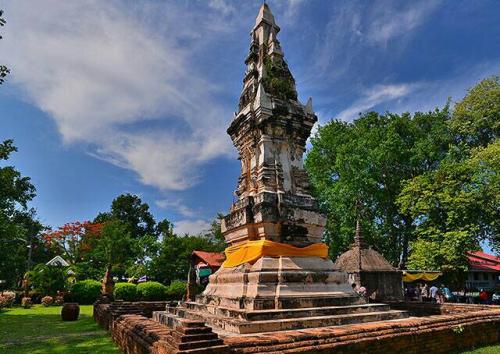
Phra That Kong Khao Noi is located in the rice fields of Tambon Tat Thong; it is an old chedi in the Khmer period, built in the 23rd-25th Buddhist century, corresponding to the late Ayutthaya period. It is located in the area of Wat Phra That Kong Khao Noi which was originally just a rice field in Tambon Tat Thong Phra That Kong Khao Noi is a brick and cement chedi. The shape is strange from the general pagoda is characterized as a rice hull. The Phra That is a rectangular chedi with three wooden indented corners. The square base is 2 meters wide on each side and raised about 1 meter in height. Next to this part is the top of the chedi, which is gradually approaching each other, while the outer peak of Phra That Kong Khao Noi is surrounded by a brick wall measuring 55 meters in size. In addition, behind the relics there is a Buddha image made of bricks. The villagers regarded it as very sacred. And in the fifth month, people come to bathe the Buddha image and cover it with gold. It is believed that if this were not done, the rain would have dried up that year. Also in the area of Ban Tad Thong, the Fine Arts Department has excavated the stories of prehistoric humans by discovering human skeletons in prehistoric times and painted utensils in Ban Chiang style
Yasothon
Ban Santitham is located on the area of 16,000 square meters with more than 700 kind of healing herbs spread over the area. There is also a Thai wooden house which is used to exhibit a variety of ancient agricultural tools, and there is a barn, rice threshing and rice milling equipment display behind the house. In addition, a part of the house is reserved for youth camp with the space for recreation activities.
Chachoengsao
King Bhumibol Adulyadej (King Rama IX) foresaw the significance of plant genetic conservation prior to a recognition of the terms “Biological Diversity” and “Conservation” in Thailand. During the trip to Klai Kang Won Palace, A. Hua Hin, Prachuap Khiri Khan Province in 1960, he passed through A. Tha Yang, Phetchaburi Province and noticed many Yang Na trees (Dipterocarpus alatus). Therefore, he had royal words to collect the seeds to plant at Phra Tamnak Piam Suk, Klai Kang Won Palace, and grow the seedlings at Royal Chitralada Projects to study. In 1985, King Rama IX gave a royal word to conserve jackfruit tress around the Grand Palace and initiated the plant conservation project in the palaces by tissue culture. Later in 1986, he had the royal idea to conserve and breed rattan palms and arrange the herbal garden in Royal Chitralada Projects area. Her Royal Highness Princess Maha Chari Sirindhorn carried on the plant conservation project by having the royal idea and asked Lord Chamberlain to carry out plant conservation project in June 1992, when the seed gene bank was formed, and study the preservation of non-industrial crops under the royal thought framework. In 1993, Mr. Sujin Phunikom, the Assistant Subdistrict Headman of Salui and Tha Sae District, Chumporn Province, and his group, cooperated with the Director of Ultra Products Co., Ltd. and the agriculturists in Chumporn Province to establish plant conservation project at the public area located at Moo.6, Salui District (presently Moo. 5 and 6, Salui District, and Moo.4 and 7, Song Phi Nong District). At the same time, the Royal Chitralada Projects was looking for the area to set up the Plant Genetic Conservation Project Under The Royal Initiative of Her Royal Highness Princess Maha Chari Sirindhorn. Subsequently, Royal Chitralada Projects represented by Professor Prachid Wamanont (the Consultant) and the team met with Chumporn Governor (Mr. Prayoon Promphan) to discuss about the project. The first five years, the project was named “Plant Conservation and Development Project Under The Royal Initiative of Her Royal Highness Princess Maha Chari Sirindhorn, Chumporn Province”. Chumporn Provincial Agricultural Extension proposed the project for the approval from Chumporn Governor and submit the project documents to the Director of Royal Chitralada Projects to respectfully inform to Her Royal Highness Princess Maha Chari Sirindhorn on 26 April 1993. Moreover, Plant Conservation and Development Project was integrated with the royal plant genetic conservation project, which Dr. Pisit Wora-urai was a Chairman. The executives meeting on 9 July 1997 had the resolution to change the project’s name from “Plant Conservation and Development Project Under The Royal Initiative of Her Royal Highness Princess Maha Chari Sirindhorn, Chumporn Province” to “Plant Genetic Conservation Project Under The Royal Initiative of Her Royal Highness Princess Maha Chari Sirindhorn”
Chumphon
The Ministry of Agriculture and Cooperatives established the Golden Jubilee Museum of Agriculture on the occasion of His Majesty King Bhumibol Adulyadej's 50-year to the throne in 1996. On the area of 800,000 square meters in Klong Nueng Subdistrict, Klong Luang District, Pathumthani Province.
Pathum Thani